


The Earth Has Always Been the Apothecary: A Brief History of Herbal Medicine
|
|
Time to read 13 min
Buy 2, Get 1 Free | 40% OFF $250+
50% OFF $500+ | Shop Now
|
|
Time to read 13 min
The Short Answer: Every civilization that ever existed, on every continent, independently arrived at the same conclusion: the plants growing in the soil around them were medicine. The Sumerians documented it in clay tablets in 3000 BCE. The ancient Egyptians recorded it in the Ebers Papyrus in 1550 BCE. Shen Nong catalogued it in China nearly 5,000 years ago. The Ayurvedic physicians of India formalized it in the Charaka Samhita. Indigenous healers of the Americas, Africa, and Australia preserved it through oral tradition for millennia. This was not coincidence. It was pattern recognition — the accumulated clinical observation of countless generations learning that the earth, if you knew how to ask it, would answer.
Table of Contents
Earth Day is a useful annual reminder that the history of herbal medicine is far older than any holiday set aside to honor it. The planet has been healing us for longer than we have been capable of remembering it. The supplement aisle, the pharmaceutical pipeline, the clinical trial — these are recent inventions. The relationship between human beings and medicinal plants is not. It is the oldest ongoing experiment in the history of our species, and the results are still coming in.
Dragon Hemp was built in this lineage. Not in the lineage of the supplement industry, which is decades old. Not even in the lineage of modern herbal medicine, which is centuries old. In the lineage of practitioners who understood that the most sophisticated pharmacy ever assembled is the one the earth has been running continuously for five thousand years.
This article traces that history — from the first written herbal records in ancient Sumer, through traditional Chinese medicine and Ayurveda, through the indigenous oral traditions that kept botanical knowledge alive when no one was writing it down, to the moment modern endocannabinoid science began explaining why all of it worked.
The earliest written records of medicinal plant use come from ancient Sumer — the civilization that gave us writing itself. Clay tablets dating to approximately 3000 BCE document Sumerian use of medicinal herbs including thyme, caraway, and dozens of other plants for specific therapeutic purposes. These were not folk remedies passed down casually. They were systematized clinical records — the first pharmacopeia.
Ancient Egypt built upon and expanded this tradition. The Ebers Papyrus, dated to approximately 1550 BCE, is one of the oldest and most complete medical documents ever discovered. It contains more than 700 herbal remedies — detailed prescriptions for everything from inflammation and pain to digestive disorders and mental distress. Garlic, juniper, aloe, and dozens of other botanicals appear with precise indications and preparation methods. These were not intuitions. They were the distilled clinical knowledge of a civilization that had been practicing botanical medicine for generations before the text was ever written.
What is striking about both traditions is not just the scope of the pharmacopeia — it is the sophistication of the underlying framework. These practitioners understood that plants had specific properties, entered specific body systems, and produced specific effects depending on how they were prepared and combined. The vocabulary was different from modern pharmacology. The underlying clinical intelligence was not.
Traditional Chinese medicine represents the most continuously documented system of botanical healing in human history. Its origins trace to the legendary emperor Shen Nong — the Divine Farmer — who is said to have lived around 2700 BCE and is credited with personally tasting and cataloguing hundreds of medicinal plants, identifying their properties, their channels of action, and their appropriate clinical applications. Historical research confirms Shen Nong as a foundational figure in Chinese herbal medicine, with texts attributing to him the first systematic classification of medicinal substances nearly 5,000 years ago.
The Shen Nong Ben Cao Jing — the Divine Farmer's Classic of Materia Medica, compiled in the first to second century AD — codified this tradition into 365 medicinal substances organized by therapeutic tier: upper-grade herbs for constitutional nourishment and longevity, middle-grade herbs for treatment, lower-grade herbs for acute intervention. This three-tier classification reflects a clinical philosophy that modern medicine is only beginning to rediscover: that the most important medicine is the kind that prevents the need for medicine.
Hemp — Da Ma — was classified in the upper tier. Non-toxic, nourishing, suitable for long-term use. A Messenger herb: neutral in thermal nature, capable of opening the channels and carrying the formula deeper. Not the medicine itself, but the vehicle that makes the medicine work. Five thousand years of clinical observation arrived at a conclusion that modern endocannabinoid science has since confirmed through an entirely different vocabulary.
More than 85% of Chinese Materia Medica originates from plants — a botanical pharmacopeia developed and refined through continuous clinical practice across five millennia.
Ayurveda — the Sanskrit word translates roughly as "the science of life" — emerged in ancient India between 3,000 and 5,000 years ago and represents a parallel tradition of plant-based healing that arrived independently at many of the same conclusions as TCM. The Charaka Samhita and the Sushruta Samhita, compiled between 600 BCE and the first century AD, detail more than 500 medicinal plants with specific indications, preparation methods, and constitutional considerations.
What distinguishes Ayurveda, like TCM, from later Western botanical traditions is its insistence on treating the constitution rather than the symptom. The Ayurvedic physician does not ask "what is wrong?" They ask "what kind of person is this, and what has become imbalanced in them?" The plant is selected not as a universal remedy but as the specific corrective for a specific constitutional pattern. Turmeric — Jiang Huang in TCM, Haridra in Ayurveda — appears in both traditions for the same inflammatory and stagnation-clearing purposes, developed independently on opposite sides of the Himalayas. The convergence is not coincidence. It is two millennia of clinical observation arriving at the same botanical truth.
What the written record cannot fully capture is the botanical knowledge that was never written down — the vast oral pharmacopeias of indigenous healing traditions across the Americas, Africa, Australia, and the Pacific. An estimated 80% of people in many parts of Asia and Africa rely on traditional plant medicine as their primary healthcare — a figure that reflects not a lack of alternatives but a depth of accumulated knowledge that modern medicine has increasingly recognized as pharmacologically significant.
Many of the world's most important pharmaceuticals trace directly to indigenous botanical knowledge. Aspirin from willow bark. Quinine from cinchona. Morphine from the opium poppy. Artemisinin — the most effective malaria treatment in the world — from Artemisia annua, a plant used in Chinese medicine for over 2,000 years. In each case, modern pharmacology isolated and synthesized what traditional medicine had already identified, used, and understood in a different vocabulary. The validation came later. The knowledge came first.
Cannabis has one of the longest and most cross-cultural medicinal histories of any plant on earth. Its documented use as medicine appears independently across virtually every major botanical healing tradition — not because the traditions borrowed from one another, but because the plant's properties are real and repeated clinical observation found them.
In China, hemp appears in the Shen Nong Ben Cao Jing in the upper tier — non-toxic, nourishing, suitable for long-term constitutional use. The seed, Huo Ma Ren, was indicated for moistening the intestines, nourishing Yin, and opening the channels as a Messenger herb. The flowering top, Má huā, carried a more penetrating and analgesic character. The physician Hua Tuo — practicing in the third century AD — is believed to have used a cannabis-containing formula called ma fei san as surgical anesthesia, among the earliest recorded use of general anesthesia anywhere in the world. The modern Chinese word for anesthesia, mázuì, carries the same ma character — hemp — at its root.
In India, cannabis appears in the Atharvaveda as one of five sacred plants. Ayurvedic texts describe it as an analgesic, digestive aid, and support for the nervous system — used in specific preparations for pain, sleeplessness, and agitation. In ancient Egypt, cannabis residue has been found in archaeological remains, with evidence of topical and medicinal use. Indigenous traditions across the Americas, Africa, and the Middle East document cannabis in therapeutic contexts across millennia.
Its removal from the modern pharmacopeia in the 20th century was geopolitical — driven by international drug control conventions that classified all cannabis alongside narcotics regardless of cannabinoid content. The clinical case against it was never made. No practitioner in any tradition examined the evidence and concluded hemp should stop being used. It was classified out by forces entirely unrelated to its pharmacology. The endocannabinoid system — discovered in 1992 — began to explain why every tradition that had used it had been right.
The 20th century produced the most dramatic rupture between human beings and botanical medicine in recorded history. The rise of synthetic pharmaceuticals, the industrialization of agriculture, and the global standardization of Western medical frameworks displaced the plant-based healing traditions that had served every civilization for millennia. In a single century, the relationship between humans and medicinal plants — maintained for 5,000 years of documented history and many thousands more before that — was declared obsolete.
It was not. The plants did not stop working. The knowledge did not disappear. It went underground — into traditional communities, into academic ethnobotany, into the clinical practices of licensed acupuncturists and Ayurvedic physicians who continued treating patients with the same formulas that had worked for centuries. And now it is returning, driven not by nostalgia but by the limits of the pharmaceutical model it displaced.
The endocannabinoid system was not discovered until 1992. The pharmacological mechanisms of curcumin, boswellic acid, and tetrahydropalmatine were not characterized until the last few decades. Modern science is not only validating ancient plant medicine — it is finally developing the vocabulary to describe what practitioners had already observed clinically for thousands of years. The observation came first. The mechanism came later. That sequence matters — because it means the clinical intelligence embedded in these traditions is real, not incidental, and the science confirming it is catching up rather than leading.
Dragon Hemp is an herbal medicine brand built in this lineage — one that incorporates cannabinoids into classical TCM formulas the way any practitioner incorporates any botanical tool: precisely, in combination, for a specific pattern. It was built in an attempt to take one of the most sophisticated botanical traditions in human history, integrate it with the most current endocannabinoid science, and deliver the result in a formulation precise enough to warrant putting a practitioner's name on it.
The founding story is one Kevin has told many times — years of treating patients with classical Chinese herbal formulas, personal experimentation with cannabinoids that proved clinically meaningful, and the decision to begin incorporating them into his traditional protocols. Chinese herbs alone can take four to twelve weeks of consistent use to produce results, and due to their strong taste, compliance is low.
What Kevin found was that the addition of cannabinoids expedited that process — unlocking the body's receptivity to the herbal formula faster, while also contributing their own unique properties that worked in synergy with the herbs. When he went looking for why hemp integrated so naturally into a classical protocol, he found that it had been one of the original Chinese herbs all along — classified in the upper tier of the Shen Nong Ben Cao Jing nearly 5,000 years ago, and removed from the clinical pharmacopeia not for clinical reasons but for political ones. Hemp was not a new ingredient being added to traditional formulas. It was an ancient one being restored to them. For the full clinical explanation of how hemp functions within the formula, Hemp as a Messenger Herb covers the TCM framework in depth.
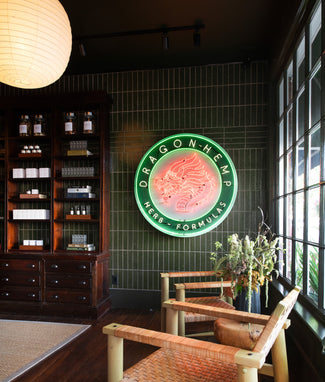
He practices out of the Dragon Hemp Apothecary in Sag Harbor, New York — a working clinical practice where the same diagnostic frameworks described in the Shen Nong Ben Cao Jing inform every formula recommendation made today. The lineage described in this article is not historical for him. It is the methodology he uses every week.
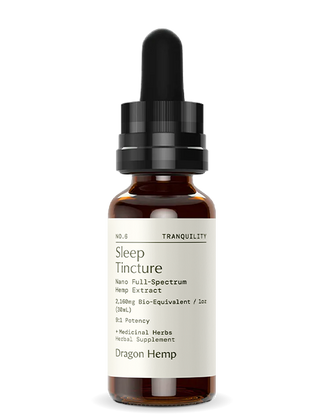
Every formula in the Dragon Hemp line traces to this history. Suan Zao Ren Tang — in the Sleep Tincture — is a 2,000-year-old formula documented in the classical texts. Corydalis, Frankincense, Myrrh, and Turmeric — in the Recovery Tincture — are drawn from the same anti-inflammatory clinical tradition that every major botanical system independently arrived at. The dit da jow heritage in the Warming and Cooling Balms runs through the Shaolin monasteries and the martial arts medical tradition that developed alongside them.
Hemp is the Messenger herb — the compound that carries the formula deeper, opens the channels, and amplifies what the other botanicals cannot reach alone. The Shen Nong Ben Cao Jing classified it in the upper tier. The endocannabinoid system explains why. Five thousand years of clinical observation and thirty years of receptor pharmacology are describing the same plant in different languages.
On Earth Day, it is worth remembering that this is not a new idea. It is the oldest idea. The earth has always been the apothecary. We are only learning, again, how to read it.
Direct Answer: The documented history of plant-based medicine begins with ancient Sumerian clay tablets around 3000 BCE, followed by the Egyptian Ebers Papyrus (1550 BCE), the Chinese Shen Nong Ben Cao Jing (c. 2700 BCE, compiled in the first to second century AD), and the Indian Ayurvedic texts. Indigenous oral traditions across every continent extend the practice further into prehistory. Plant medicine is the oldest continuously practiced form of healing in human history.
Clinical Context: Modern pharmacology has validated the botanical intelligence of these traditions — aspirin from willow bark, artemisinin from Artemisia annua (a classical Chinese herb), and dozens of other pharmaceutical compounds trace directly to plants that traditional medicine had already identified and used. The mechanism was described later. The clinical observation came first.
Direct Answer: TCM represents the most continuously documented botanical healing tradition in human history — nearly 5,000 years of clinical practice, codified in texts that classify medicinal plants by thermal nature, channel affinity, and therapeutic tier. More than 85% of Chinese Materia Medica originates from plants, used in precise multi-herb formulas designed to address the root pattern of disease rather than suppress individual symptoms.
Clinical Context: TCM's sophistication lies in its understanding that herbs work in concert — that Frankincense and Myrrh address different dimensions of the same inflammatory pattern, that Suan Zao Ren Tang's five herbs each serve a specific role in nourishing Liver Blood and calming the Shen. This formula-based approach consistently outperforms single-herb research predictions, which is why Dragon Hemp formulates multi-herb protocols rather than single-ingredient extracts.
Direct Answer: Every traditional healing system — TCM, Ayurveda, ancient Egyptian medicine, indigenous healing traditions across every continent — shares three foundational principles: that the body is a system seeking balance rather than a collection of parts that malfunction independently; that plants contain therapeutic intelligence that can support or restore that balance; and that the practitioner's role is to identify what has become imbalanced and select the specific plant formula that addresses that pattern.
Clinical Context: These principles are not philosophical — they are clinical. The convergence of traditions as geographically and culturally distinct as TCM and Ayurveda on the same botanicals (turmeric, frankincense, ginger) for the same inflammatory conditions reflects genuine pharmacological reality independently observed. Modern endocannabinoid research has arrived at a similar convergence: the ECS is a whole-system regulatory network, not a single-target receptor, which is precisely what traditional botanical medicine always assumed.
Direct Answer: Every Dragon Hemp formula draws directly from classical TCM botanical tradition — Suan Zao Ren Tang (a 2,000-year-old insomnia formula) in the Sleep Tincture, the Frankincense-Myrrh-Corydalis-Turmeric anti-inflammatory protocol in the Recovery Tincture, the dit da jow martial arts topical tradition in the Warming and Cooling Balms. Hemp is integrated as the classical Messenger herb — a role the Shen Nong Ben Cao Jing identified nearly 5,000 years ago.
Clinical Context: The integration of nano-emulsified cannabinoids with classical Chinese herb formulas is not a departure from this tradition — it is a continuation of it. TCM has always incorporated new botanical discoveries into existing clinical frameworks. Hemp's removal from the classical pharmacopeia in the 20th century was political, not clinical. Returning it to its role as Messenger herb in precisely formulated multi-herb protocols is the restoration of a clinical logic that predates the interruption by millennia.
Dragon Hemp was established by Kevin Menard, LAc, a specialist in Sports Medicine Acupuncture and Traditional Chinese Medicine. Developed in his Sag Harbor clinic, our formulations bridge the gap between ancient herbal wisdom and modern cannabinoid research to address the root causes of pain, sleep, and wellness issues.
From our Rest & Restoration and Essential Wellbeing collections to our targeted Aches & Pains topicals, every product is formulated with organically grown botanicals and premium hemp extracts. We invite you to experience our sophisticated fusion of tradition and innovation at our flagship apothecary at 108 Main Street, Sag Harbor, or explore our full range of tinctures, gummies, and balms online.
Kevin Menard, LAc.
Kevin Menard, LAc., is the founder of Dragon Hemp and a licensed acupuncturist specializing in Sports Medicine Acupuncture and Traditional Chinese Medicine. He practices at his Sag Harbor clinic, where Dragon Hemp's formulas were developed.