




Yin Deficiency and Insomnia — The TCM Root Cause of Poor Sleep
|
|
Time to read 14 min
Buy 3, Get 2 Free | 40% OFF $200+
50% OFF $400+ | Shop Now
|
|
Time to read 14 min
The Short Answer: In traditional Chinese medicine, most chronic insomnia is rooted in Yin deficiency — a state in which the body's cooling, nourishing, and anchoring resources have been depleted by chronic stress, overwork, hormonal change, or accumulated heat. Without sufficient Yin, the Yang dimension of the body — its active, warming, arousing energy — has nothing to hold it in check at night. The Shen (spirit or mind) cannot settle. The result is the pattern most chronic insomniacs know intimately: lying in bed awake despite exhaustion, waking at 3 AM unable to return to sleep, feeling unrested regardless of hours slept. Treating this pattern requires Yin nourishment — not sedation.
Table of Contents
Western sleep medicine describes insomnia in behavioral and pharmacological terms: hyperarousal, circadian disruption, sleep hygiene, sedating agents. These are not wrong descriptions. But they are descriptions of the surface, not the root. They explain what is happening — the nervous system is too activated to sleep — without explaining why the nervous system is in that state or what has to change for it to settle sustainably.
Traditional Chinese medicine offers a different starting point: not what are the symptoms, but what has become depleted that would otherwise keep the system in balance. For most chronic insomniacs, the answer is Yin.
In TCM, Yin and Yang are not metaphysical abstractions — they are clinical categories describing the complementary dimensions of every physiological process. Yin is the cooling, moistening, nourishing, and anchoring force. Yang is the warming, activating, and moving force. In health, they regulate each other: Yin prevents Yang from overheating and over-activating; Yang prevents Yin from becoming cold and stagnant.
Sleep is fundamentally a Yin-dominant state. During sleep, the body shifts into its restorative mode — cooling, repairing, consolidating, replenishing. The Yang energies that drive daytime activity retreat inward. The Shen, housed in the Heart, settles into the Blood and rests. This transition from Yang-dominant waking to Yin-dominant sleep requires sufficient Yin to hold Yang in check and anchor the Shen through the night.
When Yin is depleted — through overwork that burns resources without adequate recovery, chronic stress that maintains the HPA axis in overdrive, late nights that deny the body the Yin-replenishing hours before midnight, hormonal changes that reduce the body's Yin reserves — Yang loses its anchor. The warming, activating force that should quiet at night remains partially active. The Shen floats rather than settling. The result is the characteristic Yin deficiency sleep pattern: difficulty settling into sleep, waking in the early hours when Yang begins to rise, a quality of restlessness that is not anxiety in the conventional sense but something older and deeper — the body's cooling resources simply insufficient to hold the night together.
Yin deficiency is not a single uniform pattern — it presents differently depending on which organ system's Yin resources are most depleted. Understanding the distinction helps identify both the correct herbal formula and the most accurate product selection.
The Liver stores Blood and governs the smooth flow of Qi throughout the body. When Liver Blood is depleted — the most common pattern in chronically stressed, overworked individuals — the Blood cannot nourish the Heart adequately, the Shen loses its anchor, and sleep becomes disturbed particularly in the first half of the night. Difficulty falling asleep, vivid and restless dreaming, waking at 1–3 AM (the Liver's peak hour on the Chinese Body Clock), and emotional volatility the following day are the hallmark signs. Suan Zao Ren (Sour Jujube Seed), the primary herb in Suan Zao Ren Tang, directly nourishes Liver Blood and enters both the Heart and Liver channels — addressing both the depletion and its downstream effect on the Shen simultaneously.
The Heart houses the Shen and requires adequate Yin — Blood and fluid — to keep the spirit settled. When Heart Yin is insufficient, typically from prolonged emotional strain, overwork, or the constitutional tendency toward excess Heart Heat, the Shen becomes restless. The signs are characteristic: lying awake with a racing or anxious mind despite physical fatigue, palpitations or heart awareness at night, a quality of mental agitation that is not productive thought but restless spinning. The tongue may show a red tip. The pulse is rapid and thin. This pattern responds to herbs that nourish Heart Yin and clear the deficiency Heat it generates — Anemarrhena Root (Zhi Mu) and Poria (Fu Ling) in the Suan Zao Ren Tang formula address this dimension directly.
The Kidneys store the body's fundamental Jing — the term used in TCM for the body's essential constitutional vitality, distinct from the physical organs themselves. Jing is the deep reserve that all other organ systems draw upon and that accumulates slowly over a lifetime; it is diminished by chronic overwork, severe illness, and the natural process of aging. Without sufficient Kidney Jing and Yin, the body's deepest cooling resource is compromised. Night sweats, hot flashes, lower back aching, and the 3–5 AM waking that reflects early Yang rise are the distinguishing signs. This pattern requires kidney-tonifying and Yin-nourishing herbs beyond the scope of Suan Zao Ren Tang alone, and is the pattern most warranting direct consultation with a TCM practitioner for individualized formula selection.
The conventional pharmacological response to insomnia — benzodiazepines, Z-drugs, antihistamines — produces sedation by suppressing nervous system activity. From a TCM perspective, this is treating the surface manifestation (the Yang that will not quiet) without addressing the root (insufficient Yin to anchor it). The mechanism produces sleep the way a heavy weight produces stillness — by forcing the system down rather than restoring the conditions under which it can settle naturally.
The consequences of this approach are familiar: next-morning sedation that reflects the pharmacological overhang, tolerance that requires escalating doses, withdrawal that produces rebound insomnia more severe than the original pattern, and — most importantly — no improvement in the underlying Yin deficiency that generated the problem in the first place. Months of sedative use leaves the Yin pattern just as depleted as when treatment began, now with the added layer of pharmacological dependency.
The TCM clinical goal is different: nourish the Yin, clear the deficiency Heat it generates, calm the Shen, and restore the body's own capacity to regulate the Yang-Yin transition that sleep requires. This takes time — weeks to months of consistent herbal support — but it produces a durable change in the underlying pattern rather than a temporary suppression of its surface expression.
Suan Zao Ren Tang is the most commonly prescribed classical TCM formula for insomnia — not because it is a sedative, but because it directly addresses the Liver Blood deficiency and Heart Heat that drive the most prevalent Yin deficiency sleep pattern in clinical practice.
The five-herb formula: Suan Zao Ren (Sour Jujube Seed) as the Emperor herb, nourishing Liver Blood and calming the Heart-Shen; Fu Ling (Poria) to calm the Shen and guide turbid Heat downward; Zhi Mu (Anemarrhena Root) to nourish Yin and clear deficiency Heat; Chuan Xiong (Szechuan Lovage Root) to move Qi and prevent the nourishing herbs from becoming stagnant; Gan Cao (Licorice Root) to harmonize the formula.
A randomized controlled trial comparing Suan Zao Ren Tang to lorazepam in anxious insomniacs found that Suan Zao Ren Tang produced statistically significant improvements in Insomnia Severity Index, Pittsburgh Sleep Quality Index, wake after sleep onset, and polysomnography-measured sleep architecture — outperforming lorazepam on multiple measures after four weeks. Unlike lorazepam, Suan Zao Ren Tang produced these improvements without the dependency risk, cognitive impairment, or rebound insomnia associated with benzodiazepine use.
A separate randomized, double-blind, placebo-controlled trial demonstrated statistically significant improvements in PSQI total scores and sleep efficiency with Suan Zao Ren Tang — consistent with the formula's documented clinical efficacy across multiple study designs.
Suan Zao Ren Tang outperformed lorazepam on multiple sleep outcome measures — including insomnia severity, sleep quality, wake after sleep onset, and sleep architecture — in a randomized controlled trial of anxious insomniacs.
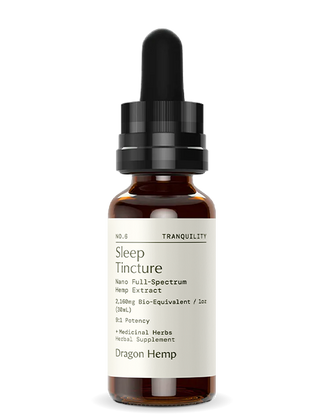
Dragon Hemp's Sleep Tincture delivers Suan Zao Ren Tang alongside nano-emulsified CBD and CBN — the three-layer protocol for Yin deficiency insomnia in a single formulation. The Suan Zao Ren Tang addresses the root-cause Liver Blood deficiency and Heart Heat. The CBD addresses the ECS dimension of the chronic stress pattern. The CBN addresses sleep maintenance and the 3 AM waking that the Liver Yin deficiency generates.
For the sleep onset layer — or for the 3 AM waking pattern specifically — Sleep Gummies or Sleep Gummies+ add the cannabinoid maintenance dimension in an extended-release edible format that sustains coverage through the Liver's peak hour. The complete Nightly Restoration Protocol integrates all components with precise timing for each.
The 90-day tonic course principle applies here: Yin deficiency accumulated over months or years does not resolve in days. Consistent nightly use of the complete protocol is what allows the herbal formula to progressively nourish the depleted resources — Liver Blood, Heart Yin — while the cannabinoids support the nervous system through the transition. Most people notice meaningful shifts in sleep quality within the first two to four weeks. Root-cause pattern resolution — sleeping soundly without supplementation — develops over three months of consistent use.
Modern endocannabinoid science offers a complementary lens on why Yin deficiency insomnia responds to cannabinoid support. The chronic stress and HPA axis overdrive that deplete Yin in TCM terms correspond precisely to the conditions that dysregulate the ECS in Western terms: elevated cortisol suppresses endocannabinoid tone, reduces CB1 receptor sensitivity, and maintains the sympathetic nervous system activation that prevents sleep onset and suppresses REM sleep.
CBD's mechanism — amplifying anandamide through FAAH inhibition, modulating the HPA axis through CB1 and CB2 receptor engagement, reducing the anxiety through 5-HT1A serotonin receptor agonism — addresses the ECS dimension of the same depletion pattern that Suan Zao Ren Tang addresses through the TCM herbal dimension. The mechanisms do not overlap. They are genuinely complementary: the herbs restore the Liver Blood and clear the Heart Heat that the root-cause deficiency generates; the cannabinoids modulate the ECS dysregulation that the same stress has produced in the body's modern regulatory system.
CBN completes the clinical picture by addressing sleep maintenance within the sleep window — reducing the 3 AM waking and nighttime awakenings that the Liver Heat pattern generates at the peak of the Liver's hour.
For modern dosing alongside TCM herbs, see the best THC dose for sleep — why 2.5mg is the clinical sweet spot.
Practitioner-formulated to restore the balance necessary for a full, deep sleep cycle.
This high-potency tincture draws from time-honored 'Suan Zao Ren Tang' formulas, blending traditional Chinese herbs—long-trusted to settle a restless mind and nourish the spirit—with nano-encapsulated CBD & CBN to target the racing thoughts and midnight wakefulness that disrupt your rest. By helping you stay asleep longer, it ensures your body reaches the deep cycles essential for systemic recovery and physical restoration.
Because a full night of sleep is about more than just rest—it’s about waking with the energy and focus to feel like yourself again.
Direct Answer: Yin deficiency is the TCM pattern in which the body's cooling, moistening, and anchoring resources — Blood, Yin fluids, and the essential Jing stored in the Kidneys — have become depleted relative to the body's Yang activating and warming forces. Without sufficient Yin, Yang cannot be adequately anchored at night, producing the characteristic pattern of insomnia, restlessness, night sweats, and the quality of depletion-with-agitation that defines the condition.
Clinical Context: In modern clinical terms, Yin deficiency corresponds closely to the chronic stress-induced HPA axis overdrive pattern: elevated baseline cortisol, reduced endocannabinoid tone, sympathetic nervous system over-activation, and the failure of the parasympathetic shift required for sleep onset. The depletion is real and measurable — it is not metaphorical. The treatment restores the depleted regulatory resources rather than suppressing the surface symptom.
Direct Answer: The characteristic signs of Yin deficiency insomnia: difficulty settling into sleep despite physical exhaustion, waking between 1–5 AM unable to return to sleep, a restless quality to the waking — not anxious thought but a kind of agitated unreachable tiredness — night sweats or a sensation of internal warmth at night, feeling unrestored despite adequate sleep hours, afternoon or evening fatigue that paradoxically does not produce deep sleep. The tongue is often red with a thin coating; the pulse is rapid and thin.
Clinical Context: The 1–3 AM window specifically corresponds to the Liver's peak hour — when Liver Blood and Yin are most active in their nightly restoration work. Waking consistently in this window indicates the Liver Blood is insufficient to complete its restorative function and that excess Liver Heat is disturbing the Heart-Shen at the peak of its nightly activation. This is the most treatable and most common presentation of Yin deficiency insomnia in clinical practice.
Direct Answer: Suan Zao Ren Tang is the classical TCM formula for insomnia from Liver Blood deficiency and Heart Heat — the most common Yin deficiency sleep pattern. It nourishes Liver Blood through Suan Zao Ren (Sour Jujube Seed), calms the Shen through Poria, clears deficiency Heat through Anemarrhena Root, moves Qi through Szechuan Lovage Root, and harmonizes the formula through Licorice Root.
Clinical Context: Suan Zao Ren Tang has been Taiwan's most commonly prescribed formula for insomnia in clinical practice. Randomized controlled trials have documented significant improvements in insomnia severity, sleep quality, wake after sleep onset, and sleep architecture. Unlike pharmaceutical sedatives, it addresses the root depletion pattern rather than suppressing symptoms pharmacologically — which is why its clinical benefit develops progressively over weeks rather than producing immediate sedation.
Direct Answer: In TCM, consistent 1–3 AM waking corresponds to the Liver's peak hour — the period when Liver Blood and Yin are most active in restorative work and when insufficient Liver Blood generates excess Liver Heat that disturbs the Heart-Shen. In Western terms, the same window corresponds to the early cortisol rise of the HPA axis, which chronic stress triggers prematurely, waking the nervous system before the body's restorative cycle is complete.
Clinical Context: This is the most treatable Yin deficiency insomnia pattern. Suan Zao Ren Tang nourishes the Liver Blood depletion driving it. CBN addresses the sleep maintenance layer — its documented efficacy for nighttime awakenings makes it the most appropriate cannabinoid for the 3 AM pattern. The combination, taken consistently over four to eight weeks, typically produces meaningful reduction in early-morning waking as the underlying pattern resolves.
Direct Answer: TCM insomnia treatment nourishes the depleted resources that produce insomnia — Liver Blood, Heart Yin, the regulatory capacity of the nervous system — rather than pharmacologically suppressing the nervous system activity that insomnia produces. The goal is a system that sleeps well because it has what it needs, not a system that is forced into sedation despite lacking what it needs.
Clinical Context: Pharmaceutical sedatives produce immediate effect but leave the root pattern unchanged. Months of benzodiazepine or Z-drug use does not improve Liver Blood deficiency — it suppresses its surface manifestation while the depletion continues and often worsens under the burden of pharmacological management. TCM treatment requires consistency over weeks to months, but produces durable change in the underlying pattern rather than an escalating pharmacological intervention on a deteriorating baseline.
Direct Answer: Yes — menopausal insomnia, hot flashes, and night sweats are among Suan Zao Ren Tang's strongest clinical indications. The menopausal pattern in TCM is precisely Kidney and Liver Yin deficiency with deficiency Heat rising — declining estrogen generates the same excess Heat pattern that Suan Zao Ren Tang's Anemarrhena Root (Zhi Mu) specifically targets by nourishing Yin and clearing deficiency Heat.
Clinical Context: Clinical research supports this indication specifically. A prospective study of menopausal women found Suan Zao Ren Tang produced significant improvements in Pittsburgh Sleep Quality Index scores after four weeks — with superior benefit in women experiencing more severe menopausal symptoms, consistent with its classical indication for Yin deficiency with Heat. Zhi Mu, one of the five herbs, directly nourishes Yin and clears the deficiency Heat that drives hot flashes and night sweats. For women whose insomnia, night sweats, and temperature dysregulation form a cluster, Suan Zao Ren Tang in Dragon Hemp's Sleep Tincture is the most clinically targeted available formulation. Those with complex or severe menopausal patterns may benefit from direct consultation with Kevin Menard, L.Ac. at the Dragon Hemp Apothecary to discuss individualized formula support.
Dragon Hemp was established by Kevin Menard, LAc, a specialist in Sports Medicine Acupuncture and Traditional Chinese Medicine. Developed in his Sag Harbor clinic, our formulations bridge the gap between ancient herbal wisdom and modern cannabinoid research to address the root causes of pain, sleep, and wellness issues.
From our Rest & Restoration and Essential Wellbeing collections to our targeted Aches & Pains topicals, every product is formulated with organically grown botanicals and premium hemp extracts. We invite you to experience our sophisticated fusion of tradition and innovation at our flagship apothecary at 108 Main Street, Sag Harbor, or explore our full range of tinctures, gummies, and balms online.
Kevin Menard, LAc.
Kevin Menard, LAc., is the founder of Dragon Hemp and a licensed acupuncturist specializing in Sports Medicine Acupuncture and Traditional Chinese Medicine. He practices at his Sag Harbor clinic, where Dragon Hemp's formulas were developed.