



Hemp as a Messenger Herb — The TCM Philosophy Behind Dragon Hemp
|
|
Time to read 16 min
Buy 3, Get 2 Free | 40% OFF $200+
50% OFF $400+ | Shop Now
|
|
Time to read 16 min
The Short Answer: In traditional Chinese medicine, hemp (Da Ma / Huo Ma Ren) has been documented for over 2,000 years — classified among the upper-grade herbs in the Shen Nong Ben Cao Jing as nourishing, non-toxic, and suitable for long-term use. Its TCM properties — neutral thermal nature, channel-opening action, and its ability to carry other herbs deeper into the body — make it what practitioners call a messenger herb: a compound that amplifies and directs the action of everything it travels with. This is the clinical logic behind every Dragon Hemp formula. Hemp is not the product. It is the vehicle that makes the product work.
Table of Contents
Most brands treat hemp as the headline. The cannabinoid percentage. The milligram count. The thing being sold.
At Dragon Hemp, we treat hemp the way a TCM practitioner treats it — as the vehicle. The compound whose job is not to produce an effect in isolation, but to open the channels, carry the formula deeper, and amplify what the other herbs cannot reach alone. This is not a marketing position. It is a 2,000-year-old clinical classification.
Understanding it changes how you understand every product in the Dragon Hemp line.
The earliest systematic documentation of hemp in Chinese medicine appears in the Shen Nong Ben Cao Jing — the Divine Farmer's Classic of Materia Medica, compiled in the first to second century AD and attributed to the mythological emperor Shen Nong, who is said to have tasted and catalogued hundreds of medicinal substances. Historical research on cannabis in classical Chinese medical literature confirms hemp as one of the earliest and most consistently documented botanicals in the Chinese pharmacopeia.
The Shen Nong Ben Cao Jing organized its 365 medicinal substances into three tiers. Upper-grade herbs — shang pin — were defined as non-toxic, suitable for long-term daily use, and capable of nourishing the body and extending life. They were not rescue medicines. They were constitutional medicines: taken consistently over time to build and regulate what the body does naturally. Hemp was placed in this category — alongside ginseng, licorice root, and jujube — as a nourishing, moistening, Qi-building botanical.
Hemp seed (Huo Ma Ren) was specifically indicated for moistening the intestines and relieving dryness, nourishing Yin, and supporting the body's fluid metabolism. The thermal nature assigned in classical texts: neutral. The flavor: sweet. The primary channels entered: Spleen, Stomach, and Large Intestine — the digestive and metabolic channels responsible for absorbing nourishment and distributing it through the body. Later commentaries also establish a Liver channel affinity, which is clinically significant: the Liver stores Blood and governs the smooth flow of Qi. When Liver Blood is insufficient — a pattern that accumulates under chronic stress — the Shen (spirit or mind) loses its anchor and sleep becomes disturbed. It is through this Liver channel dimension that hemp's nourishing action connects directly to the Sleep Tincture's formula logic, working alongside Suan Zao Ren Tang to replenish the Liver Blood that stress depletes.
The Shen Nong Ben Cao Jing's seed-focused classification was not the whole story. Where hemp seed was the constitutional herb — nourishing, sustaining, for long-term use — the flowering top of the cannabis plant, Má huā (麻花), carried a different clinical profile entirely. It was understood as the more active, more penetrating dimension of the plant: where the seed nourished and moistened, the flower moved and opened, with properties that practitioners recognized as powerfully analgesic and anesthetic at sufficient concentration.
This distinction reached its most dramatic historical expression in the work of Hua Tuo, the third-century AD physician known as the God of Surgery — among the earliest recorded practitioners in the world to develop general anesthesia for surgical procedures. Hua Tuo created a formula called ma fei san (麻沸散) — literally "cannabis boiling powder" — dissolved in wine and administered before operations. Classical Chinese medical literature records that patients who received it lost sensation entirely, allowing Hua Tuo to perform abdominal surgeries, organ resections, and tumor removals that were otherwise impossible in the ancient world. He was practicing surgical anesthesia seventeen centuries before Western medicine developed ether.
The precise ingredients of ma fei san were lost when Hua Tuo was imprisoned by the warlord Cao Cao and his manuscripts were destroyed. What survives is the name. And the name is significant: ma (麻) means both hemp/cannabis and numbed/tingling — a linguistic double meaning that reflects the plant's dual identity as both botanical and analgesic agent. The character appears again in the modern Chinese word for anesthesia, mázuì (麻醉), where the same ma root connects the ancient formula to the clinical concept it pioneered. Whether Má huā was the primary active ingredient in ma fei san or one of several is a question scholarship has not fully resolved — but the linguistic and historical evidence points clearly to hemp as central to the most sophisticated pain intervention in the ancient medical world.
This is the clinical lineage Dragon Hemp sits within. Not the modern supplement industry. Not the CBD market. The 2,000-year tradition of Chinese practitioners who understood hemp as a medicinal plant capable of addressing pain, regulating the nervous system, and carrying other herbs deeper into the body — and who built their most sophisticated formulas around it accordingly.
Hemp was classified among the upper-grade herbs in the Shen Nong Ben Cao Jing — defined as non-toxic, nourishing, and suitable for long-term use to build constitutional vitality.
This dual identity — hemp as a constitutional tonic in the seed form, hemp as a penetrating analgesic in the flower form — is precisely what modern cannabinoid science is now mapping onto a molecular level. The seed's nourishing properties reflect the fatty acid and minor cannabinoid profile. The flower's analgesic and channel-opening properties reflect the CBD, CBN, and terpene profile that full-spectrum extraction captures. The classical practitioners did not have the biochemistry. They had the clinical observation. And the observation was correct.
In Chinese herbal medicine, formulas are not collections of individual herbs acting independently. They are structured systems — each herb assigned a role based on its properties, its channel affinities, and its relationship to the other herbs in the formula.
The simplest way to understand it: in a well-built TCM formula, every herb has a job. One herb does the primary work. Others support it. One herb makes sure everything arrives at the right place in the body. That last herb is the Messenger.
The classical formula architecture defines this through four roles: the Emperor herb (the primary therapeutic agent), the Minister herbs (supporting the Emperor's action), the Assistant herbs (moderating intensity and addressing secondary conditions), and the Messenger herb — also translated as the Guide or Envoy herb.
The Messenger herb's function is specific: it directs the formula to the correct channel or body region, and it harmonizes the actions of the other herbs so they work together rather than at cross purposes. A formula without a Messenger can be effective in isolation but diffuse in application — the active compounds reach the general circulation without specific directional guidance.
Hemp occupies the Messenger role in the Dragon Hemp formulas for two reasons. First, its neutral thermal nature makes it compatible with both warming and cooling formulas — it does not add heat to a formula designed to clear it, nor does it cool a formula designed to warm. It adapts. Second, its channel-opening properties — the ability to move through the body's channel system and improve the permeability of tissues to other compounds — make it an ideal carrier for the more specific-acting herbs that share the formula.
This is the clinical rationale for nano-emulsification. Nano-encapsulating the cannabinoids in lipid particles that bypass first-pass liver metabolism is a modern expression of the Messenger herb concept: getting the active compounds to the right place, in sufficient concentration, with minimal loss in transit. The TCM principle and the pharmacological mechanism point to the same clinical goal.
One clarification worth stating plainly: the hemp used in Dragon Hemp formulas is industrial hemp — containing less than 0.3% THC by dry weight. At these concentrations, the psychoactive effect associated with the cannabis flower Hua Tuo worked with is not present. What is present is the full-spectrum cannabinoid and terpene profile that gives hemp its regulatory, channel-opening, and Messenger properties — the clinical value that classical practitioners documented, and that modern endocannabinoid research now confirms.
Hemp's disappearance from the clinical TCM pharmacopeia over the last century was not a clinical decision. It was a political one — driven by 20th-century international drug control conventions that grouped cannabis with narcotics regardless of cannabinoid content, and by the subsequent removal of hemp from official Chinese materia medica texts as a matter of regulatory compliance rather than therapeutic reassessment.
No classical practitioner looked at the body of evidence on hemp's clinical properties and concluded it should stop being used. The channel-entering properties, the neutral thermal nature, the Messenger function — none of that was challenged. The herb was classified out of use by forces that had nothing to do with its pharmacology.
This context matters for understanding Dragon Hemp's formulation philosophy. Reintegrating hemp into TCM-style botanical formulas is not innovation for its own sake. It is a return to a clinical logic that predates the interruption — one that modern endocannabinoid science now confirms through a completely different vocabulary. The ECS and the channel system are not the same thing. But they describe overlapping biological realities. Hemp's ability to modulate both is exactly what the classical practitioners documented, and exactly what the pharmacological research now validates.
Every Dragon Hemp formula is built on this Messenger herb principle. Hemp — full-spectrum, with its complete cannabinoid and terpene profile intact — is not added to the Chinese herb formulas as an active ingredient. It is the vehicle through which the herbs are delivered, the compound that opens the channels and carries everything else deeper.
Full-spectrum nano-CBD and nano-CBN carry Corydalis, Frankincense, Myrrh, Turmeric, Pubescent Angelica Root, and Chinese Angelica Root into the channels where Blood stagnation and inflammatory obstruction have accumulated. The cannabinoids modulate CB2 receptors on immune cells — reducing the cytokine cascade — while the herbs address the root pattern. The hemp is the Messenger. The herbs are the Emperor and Minister. The formula works because all of them arrive at the same site simultaneously. For a deeper look at why cannabinoids and Chinese herbs outperform either approach alone, the clinical rationale runs deeper than delivery — the mechanisms are entirely non-overlapping.
Formulated to soothe the body and accelerate your return to movement.
This precise blend of time-honored Chinese herbs and nano-encapsulated cannabinoids is designed to support the body's natural response to physical stress and enhance restoration. Whether used to shorten the recovery window after peak exertion or as a daily ritual to dissolve accumulated tension, this fast-acting formula works from the inside out to restore your natural momentum.
Because your ability to bounce back shouldn’t be a bottleneck—and recovery should be as intentional as the effort itself.
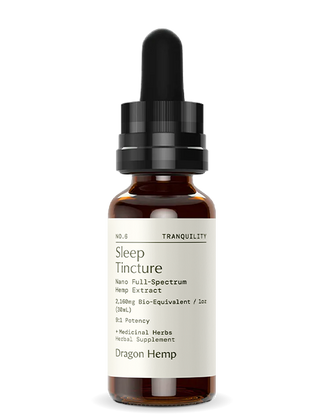
Full-spectrum nano-CBD and nano-CBN carry the Suan Zao Ren Tang formula — Sour Jujube Seed, Poria, Anemarrhena Root, Schisandra Fruit, and Licorice Root — into the Heart and Liver channels that govern the Shen and Blood. The cannabinoids support the inhibitory neurotransmitter environment required for sleep maintenance. The herbs nourish the Liver Blood that anchors the Shen through the night. Hemp ensures both reach the channels that need them. Understanding how CBD interacts with REM sleep architecture explains why the cannabinoid and herb dimensions address sleep through entirely different but complementary pathways.
Practitioner-formulated to restore the balance necessary for a full, deep sleep cycle.
This high-potency tincture draws from time-honored 'Suan Zao Ren Tang' formulas, blending traditional Chinese herbs—long-trusted to settle a restless mind and nourish the spirit—with nano-encapsulated CBD & CBN to target the racing thoughts and midnight wakefulness that disrupt your rest. By helping you stay asleep longer, it ensures your body reaches the deep cycles essential for systemic recovery and physical restoration.
Because a full night of sleep is about more than just rest—it’s about waking with the energy and focus to feel like yourself again.
The 3,600mg full-spectrum hemp extract in both topical formulas functions as the primary penetrating carrier — the compound that allows the aromatic, channel-opening herbs (Aconite, Capsicum, Camphor, Gardenia Fruit) to reach the channel level beneath the skin, where Bi Syndrome obstruction lives. Without the hemp base, the herbs address the surface. With it, they reach the depth where the Cold, Heat, or Damp pathogen has settled. This is the modern expression of the dit da jow formula tradition — the topical penetrating carrier amplified by cannabinoid science.
Formulated to warm the body and move stagnation in joints and muscles that have grown stiff over time.
This fast-acting topical moves with you, pairing a robust concentration of full-spectrum hemp extract with heating Chinese herbs to provide a deep, circulating warmth to areas of lingering discomfort.
Drawing from time-honored ‘dit da jow’ martial arts formulas, this high-potency blend encourages blood flow and thaws the "stuck" energy that makes movement feel like a chore to help you reclaim your daily mobility and stay active with ease.
Because chronic stiffness shouldn’t be a barrier—and finding your flow should feel effortless.
Formulated to calm the body and clear excess heat following activity or physical stress.
This fast-acting topical moves with you, pairing a robust concentration of full-spectrum hemp extract with cooling Chinese herbs to provide a steady, refreshing chill to areas of sudden sensitivity.
Drawing from time-honored ‘dit da jow’ martial arts formulas, this high-potency blend encourages circulation while systematically diffusing the "trapped" heat from overexertion to help you maintain balance and return to movement.
Because recovery shouldn’t be a waiting game—and keeping your cool shouldn’t keep you frozen in place.
Wellness Tincture and Calming Gummies
Where hemp functions as a standalone formula — without classical TCM herbs — it operates as both Emperor and Messenger simultaneously. The full-spectrum CBD in the Wellness Tincture and Calming Gummies modulates the HPA axis and endocannabinoid tone as the primary therapeutic action. The Shen Nong Ben Cao Jing's upper-grade classification applies directly: non-toxic, nourishing, and suited to long-term daily use as a constitutional support. The cortisol trap that chronic stress creates — elevated baseline cortisol, disrupted sleep, systemic inflammation — is precisely the kind of constitutional dysregulation that upper-grade tonic herbs were designed to address over time.
The Messenger function operates at the formula level — meaning it compounds through consistent daily use rather than through a single dose. A single dose of any Dragon Hemp formula delivers the cannabinoids and herbs to the channels. Consistent daily use is what shifts the channel baseline. This is the same principle as the 90-day tonic course: the Messenger does not produce the result in isolation. It creates the conditions, repeatedly, until the body's regulatory baseline has genuinely changed.
Formulated to fortify your baseline and invite a sense of steady composure—day in and day out.
This Certified Organic formula features pure, full-spectrum CBD—selected to support a healthy inflammatory response and daily immune function. This pure, restorative ritual works systemically to build a resilient shield against the physical and mental wear of modern life, ensuring you remain adaptable regardless of what the day demands.
Because true balance is cumulative—and a strong foundation makes every day effortless.
Formulated to ground the nervous system and invite a gentle return to center—without dulling your senses.
This precise dose of Full-Spectrum CBD—selected to help buffer the overstimulation of modern life and quiet the mental noise of a demanding day—supports a resilient reset whenever you need it most. This clean, plant-based approach helps you navigate life's sharpest stressors with a sense of composed clarity.
Because a moment of pause shouldn’t be a luxury—and finding your balance should be effortless.
Dragon Hemp's name is not incidental. It reflects a specific clinical position: that hemp — restored to its classical TCM role as a Messenger herb and upper-grade botanical — belongs at the center of a modern formulation approach that takes both the ancient system and the modern science seriously.
I did not set out to build a CBD brand. I set out to build a formula — a clinical expression of the relationship between cannabinoid science and Chinese herbal medicine that the historical record points to and that modern pharmacology confirms. Hemp is the thread that connects both systems. The Messenger that makes the whole formula coherent.
That is the TCM philosophy behind Dragon Hemp. And it is why every product in the line — from the Recovery Tincture's pain protocol to the Sleep Tincture's Shen-nourishing formula — is built around the same foundational insight: hemp does not produce the result. It creates the conditions for the result to occur.
Direct Answer: Hemp (Da Ma / Huo Ma Ren) has been documented in Chinese medicine for over 2,000 years, classified in the Shen Nong Ben Cao Jing as an upper-grade herb — non-toxic, nourishing, and suitable for long-term constitutional use. Its primary classical actions include moistening the intestines, nourishing Yin, and opening the channels to improve the distribution of Qi and Blood.
Clinical Context: Hemp's neutral thermal nature and channel-opening properties give it what practitioners call a Messenger function — the ability to carry other herbs deeper into the body and direct formula action to specific channels or regions. This is the clinical logic behind Dragon Hemp's multi-herb formulas: hemp delivers the botanicals and cannabinoids to the channels where the root-cause pattern requires intervention.
Direct Answer: A Messenger herb (also called a Guide or Envoy herb) is the component in a classical Chinese herbal formula that directs the formula's action to a specific channel, organ system, or body region, and harmonizes the actions of the other herbs so they work together effectively. Every classical formula includes a Messenger herb by design.
Clinical Context: The Messenger role is one of four structural positions in a classical TCM formula — alongside the Emperor (primary therapeutic agent), Minister (supporting the Emperor), and Assistant (moderating and addressing secondary conditions). Without a Messenger, a formula is diffuse: the active compounds reach circulation but without specific directional guidance. Hemp's neutral thermal nature and broad channel affinity make it an ideal Messenger for formulas that combine warming and cooling herbs alongside cannabinoids.
Direct Answer: In classical Chinese texts, cannabis is documented under the term Da Ma (大麻), with different parts of the plant assigned different therapeutic properties. Hemp seed (Huo Ma Ren) is the primary medicinal component in the Chinese pharmacopeia — valued for its nourishing and moistening properties rather than psychoactive effects. Modern hemp, with negligible THC, maps most closely to the seed-focused clinical tradition.
Clinical Context: The classical distinction between cannabis used for fiber, for food, and for medicine reflects a sophisticated understanding of the plant's properties that predates modern cannabinoid science. The therapeutic use of hemp in Dragon Hemp formulas draws on the seed tradition — the nourishing, Yin-building, channel-opening dimension of the plant — rather than the psychoactive flower. Full-spectrum hemp extract captures this botanical complexity: the complete cannabinoid and terpene profile that reflects the plant's systemic regulatory properties.
Direct Answer: Because cannabinoids and Chinese herbs address pain, stress, inflammation, and sleep through entirely non-overlapping mechanisms — making the combination clinically superior to either approach alone. CBD modulates the endocannabinoid system through CB1 and CB2 receptor pathways. Chinese herbs address the root pattern of channel obstruction, Blood stagnation, and pathogenic factor accumulation through botanical pharmacology. Neither replaces the other.
Clinical Context: The classical TCM formula structure — Messenger herb carrying Emperor and Minister herbs to the target channel — maps directly onto the Dragon Hemp formulation logic. Hemp delivers the formula. The Chinese herbs address the root pattern. The cannabinoids modulate the ECS dimension that classical herbalism predates. The result is a formula that covers the biological terrain that neither system covers alone.
Direct Answer: Full-spectrum hemp extract retains the complete cannabinoid and terpene profile of the plant — CBD, CBN, CBG, CBC, trace THC, and the aromatic terpene compounds — rather than isolating a single cannabinoid. The combination produces what researchers call the entourage effect: the synergistic interaction of multiple plant compounds producing clinical outcomes that isolated cannabinoids do not replicate.
Clinical Context: From a TCM perspective, full-spectrum extraction preserves the botanical complexity that gives hemp its classical properties. Isolating CBD from the full hemp plant is analogous to extracting curcumin from turmeric and discarding the rest — you retain one active compound but lose the synergistic matrix that the whole plant produces. Dragon Hemp uses full-spectrum extract because the Messenger herb function depends on the complete botanical profile, not a single isolated fraction.
Dragon Hemp was established by Kevin Menard, LAc, a specialist in Sports Medicine Acupuncture and Traditional Chinese Medicine. Developed in his Sag Harbor clinic, our formulations bridge the gap between ancient herbal wisdom and modern cannabinoid research to address the root causes of pain, sleep, and wellness issues.
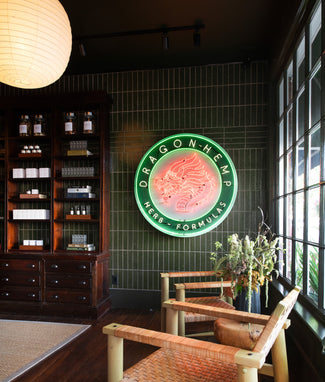
From our Rest & Restoration and Essential Wellbeing collections to our targeted Aches & Pains topicals, every product is formulated with organically grown botanicals and premium hemp extracts. We invite you to experience our sophisticated fusion of tradition and innovation at our flagship apothecary at 108 Main Street, Sag Harbor, or explore our full range of tinctures, gummies, and balms online.