





Sleep and Pain: Why You Can't Fix One Without the Other
|
|
Time to read 12 min
Buy 2, Get 1 Free | 40% OFF $250+
50% OFF $500+ | Shop Now
|
|
Time to read 12 min
Chronic pain disrupts sleep architecture — specifically suppressing slow-wave NREM deep sleep and REM sleep, both of which are required for tissue repair and inflammatory regulation
Disrupted sleep lowers the pain threshold by 30–40% the following day — the nervous system's pain amplification increases measurably after poor sleep, creating a reinforcing cycle
The overnight repair cycle depends on slow-wave NREM sleep for tissue repair and growth hormone release — chronic pain patients who sleep poorly are literally healing more slowly
The complete protocol treats both simultaneously: Sleep Gummies or Sleep Tincture for sleep architecture, Recovery Tincture for the inflammatory baseline — not sequentially, together
Table of Contents
The Short Answer: The relationship between sleep and pain is bidirectional and molecularly self-reinforcing. Chronic pain fragments sleep architecture, reduces restorative slow-wave sleep, elevates overnight cortisol, and depletes endocannabinoid tone — all of which increase pain sensitivity the following day. Poor sleep, in turn, amplifies the inflammatory activity that drives chronic pain and lowers the pain threshold systemically. Breaking this cycle requires treating both problems simultaneously with targeted cannabinoid and botanical support for pain and sleep architecture.
Pain interrupts sleep. Poor sleep amplifies pain.
This is not a metaphor. It is a documented bidirectional biological relationship that creates a self-sustaining cycle at the molecular level — measurable in endocannabinoid tone, cortisol rhythm, and inflammatory cytokine expression. The cycle does not break by addressing only one side. The biology does not allow it.
Pain is a threat signal. The nervous system treats it as such — activating arousal pathways designed to keep the organism responsive to acute danger. In chronic pain, this protective mechanism becomes pathological. The pain signal persists without a corresponding acute threat. The nervous system remains partially activated, limiting the depth of sleep it will permit.
The result is fragmented sleep architecture. Slow-wave sleep (N3) — primarily when growth hormone is released and tissue repair is most active — is suppressed. The body cannot execute the cellular repair that would reduce the inflammation driving the pain. REM sleep — when the nervous system processes and integrates the day's pain experience — is disrupted, reinforcing rather than recalibrating the central sensitization that amplifies the pain signal. Frequent micro-arousals prevent the deep Yin states that allow full restoration.
The result is compounding: each night of fragmented sleep leaves the body less recovered, more inflamed, and neurologically more primed for pain the next day.
Research on sleep deficiency and pain mechanisms confirms that sleep disruption reduces the activity and efficiency of systems with analgesic properties — including the endogenous opioid and endocannabinoid systems — while simultaneously activating pro-inflammatory pathways. With fewer internal resources to dampen pain signaling, the nervous system becomes hypersensitive to stimuli that would have registered as mild discomfort with adequate sleep.
A landmark review in the Journal of Pain found that sleep impairment is a stronger and more reliable predictor of pain exacerbation than pain is of sleep impairment — establishing the directionality clearly. The cycle begins with sleep, not with pain.
Poor sleep also disrupts the cortisol rhythm that regulates overnight inflammatory activity. The cortisol rebound that begins between 3 and 5 AM — the early morning rise designed to prepare the body for activity — is dysregulated by fragmented sleep, producing irregular surges that activate inflammatory pathways and prime the immune system for a pro-inflammatory day. This is why pain patients so frequently identify 3 AM as their disruption point: the cortisol rebound, in a fragmented sleep context, generates enough arousal to break the sleep cycle entirely at that window. The cortisol trap covers this mechanism in depth.
In Traditional Chinese Medicine, sleep is not passive. It is when the body retreats into Yin — when the Liver stores blood, when the Heart shen settles, when the channels of the body clear and replenish. The 3 AM cortisol window corresponds precisely to the Liver's active period on the Chinese organ clock (1 to 3 AM): the time when the Liver is governing blood distribution, clearing metabolic debris, and preparing the channels for the day.
Pain, in TCM, is stagnation — blocked Qi and impeded blood flow. During uninterrupted sleep, the Liver moves blood through the channels and the stagnation of the day is gradually resolved. When pain keeps pulling the nervous system back toward Yang arousal before this process is complete, the stagnation accumulates rather than clearing. The next day begins with more obstruction than the day before.
This is why TCM pain protocols have always included sleep restoration as a clinical priority. Not as a secondary concern. As a root-cause intervention.
For the pain layer: Recovery Tincture taken morning and evening delivers nano-emulsified full-spectrum CBD, CBN, trace THC, and seven TCM herbs — Chinese Angelica Root, Corydalis, Frankincense, Licorice Root, Myrrh, Pubescent Angelica Root, and Turmeric — to reduce systemic inflammation, address the underlying stagnation pattern, and support consistent ECS tone throughout the day and night. Apply the appropriate topical balm to the affected pain site in the evening before bed so botanical and cannabinoid activity is present during the overnight tissue-repair window.
For added nighttime pain relief, the Warming and Cooling Balms have a practical advantage that ice packs and heating pads cannot offer: they move with you. Ice requires immobility and numbs rather than heals; heating pads carry burn risk and can't be used safely through the night. Applied before bed, the pattern-appropriate balm delivers continuous thermal and herbal pain relief through sleep — when the body's repair cycle is most active and uninterrupted coverage matters most
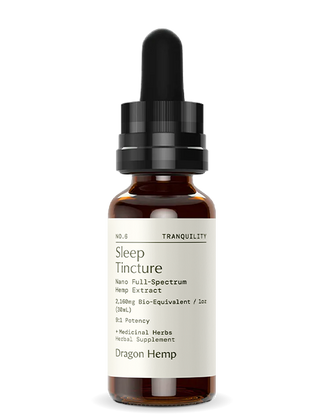
For the sleep layer: Sleep Tincture delivers nano-emulsified full-spectrum CBD, nano CBN, and trace non-intoxicating THC alongside Suan Zao Ren Tang — one of the foundational TCM formulas for insomnia, particularly anxiety-driven sleep disruption — containing Sour Jujube Seeds, Poria, Anemarrhena Root, Schisandra Fruit, and Licorice Root. This formula supports sustained restoration through the full night, with particular efficacy for the 3 to 5 AM cortisol rebound window that pain patients most frequently identify as their disruption point.
For patients whose primary complaint is sleep onset rather than maintenance, Sleep Gummies (25mg CBD + 10mg CBN, THC-FREE) offer a simpler entry point. For the 3 AM waking pattern — the most consistent pain-related sleep complaint — Sleep Gummies+ (25mg CBD + 10mg CBN + 2.5mg THC) provides stronger sleep architecture support and CB1 engagement that helps the nervous system release from the pain-driven arousal during the second half of the night.
CBN and its effects on sleep and wellness covers the sleep cannabinoid science. CBD and REM sleep architecture addresses cannabinoid effects on sleep stage restoration specifically.
Formulated to soothe the body and accelerate your return to movement.
This precise blend of time-honored Chinese herbs and nano-encapsulated cannabinoids is designed to support the body's natural response to physical stress and enhance restoration. Whether used to shorten the recovery window after peak exertion or as a daily ritual to dissolve accumulated tension, this fast-acting formula works from the inside out to restore your natural momentum.
Because your ability to bounce back shouldn’t be a bottleneck—and recovery should be as intentional as the effort itself.
Formulated to warm the body and move stagnation in joints and muscles that have grown stiff over time.
This fast-acting topical moves with you, pairing a robust concentration of full-spectrum hemp extract with heating Chinese herbs to provide a deep, circulating warmth to areas of lingering discomfort.
Drawing from time-honored ‘dit da jow’ martial arts formulas, this high-potency blend encourages blood flow and thaws the "stuck" energy that makes movement feel like a chore to help you reclaim your daily mobility and stay active with ease.
Because chronic stiffness shouldn’t be a barrier—and finding your flow should feel effortless.
Formulated to calm the body and clear excess heat following activity or physical stress.
This fast-acting topical moves with you, pairing a robust concentration of full-spectrum hemp extract with cooling Chinese herbs to provide a steady, refreshing chill to areas of sudden sensitivity.
Drawing from time-honored ‘dit da jow’ martial arts formulas, this high-potency blend encourages circulation while systematically diffusing the "trapped" heat from overexertion to help you maintain balance and return to movement.
Because recovery shouldn’t be a waiting game—and keeping your cool shouldn’t keep you frozen in place.
Practitioner-formulated to restore the balance necessary for a full, deep sleep cycle.
This high-potency tincture draws from time-honored 'Suan Zao Ren Tang' formulas, blending traditional Chinese herbs—long-trusted to settle a restless mind and nourish the spirit—with nano-encapsulated CBD & CBN to target the racing thoughts and midnight wakefulness that disrupt your rest. By helping you stay asleep longer, it ensures your body reaches the deep cycles essential for systemic recovery and physical restoration.
Because a full night of sleep is about more than just rest—it’s about waking with the energy and focus to feel like yourself again.
CBD's ECS mechanism and the TCM herbal mechanisms are non-overlapping. CBD suppresses cytokine signaling through CB2 receptor modulation and addresses central sensitization. Turmeric and Frankincense inhibit COX-2 and 5-LOX respectively. Corydalis provides direct analgesia through dopamine and opioid receptor engagement. Myrrh disperses Blood stagnation at the tissue level.
These are four distinct pharmacological routes to the same clinical outcome — reduced joint pain and inflammation. No single pharmaceutical addresses more than one or two. The combined protocol addresses all four simultaneously, which is the clinical rationale for the Recovery Tincture's formula design and the reason that consistent use produces cumulative benefit that individual components do not replicate.
Chinese herbs for arthritis management take four to twelve weeks of consistent daily use to produce their full anti-inflammatory compounding effect. Cannabinoids expedite the body's receptivity to the herbal protocol — a finding consistent with hemp's classical role as Messenger herb in TCM formulas. The combination shortens the timeline that the herbs alone would require. Why CBD takes up to 90 days for full benefits explains the endocannabinoid system timeline in detail.
Direct Answer: Pain activates the nervous system's arousal pathways — a survival mechanism that limits deep sleep during perceived threat. In chronic pain, this mechanism becomes chronic itself, fragmenting sleep architecture and suppressing the restorative slow-wave and REM stages that allow tissue repair and nervous system recalibration.
Clinical Context: The consequence is not only fatigue. Suppressed N3 sleep means impaired overnight tissue repair — the inflammation driving the pain accumulates rather than resolves. Disrupted REM means central sensitization is reinforced overnight. The pattern compounds. This is why sleep disruption is not a secondary symptom of chronic pain — it is an active driver of the condition.
Direct Answer: Yes. Sleep deprivation measurably reduces the activity of the endogenous opioid and endocannabinoid systems, lowers the pain threshold, elevates pro-inflammatory cytokines, and amplifies central sensitization. Even one to two nights of significantly disrupted sleep produces detectable changes in pain sensitivity.
Clinical Context: In chronic sleep disruption associated with pain, these changes compound over months. The nervous system recalibrates to expect pain, and the threshold continues to drop. Restoring sleep quality is a clinical priority in any chronic pain protocol — not a comfort measure that follows pain resolution.
Direct Answer: Most people experience meaningful improvement within 4 to 8 weeks of consistent protocol use, with early signs — reduced nighttime waking frequency, improved morning pain levels — often appearing within 2 to 3 weeks.
Clinical Context: The ECS cannot recalibrate in days. The central sensitization pattern built over months or years of disrupted sleep requires sustained signal input to shift. Consistency over weeks is the critical variable. The biology needs enough continuous support to establish a new baseline — not sporadic interventions when symptoms peak.
Clinical Context: The more complete question is whether COX-2 inhibition alone is sufficient — it is not, because the 5-LOX leukotriene pathway continues driving inflammation if COX-2 is blocked without blocking 5-LOX simultaneously. Frankincense closes the 5-LOX route. Myrrh addresses Blood stagnation. Corydalis provides direct analgesia. The full four-herb protocol combined with CBD addresses the inflammation from five distinct directions that turmeric alone cannot cover.
Direct Answer: Full-spectrum cannabinoid formulas combining CBD, CBN, and trace THC address both the inflammatory driver of pain and the sleep architecture disruption it causes. CBN supports sleep onset and maintenance. CBD addresses ECS-level inflammation and nervous system dysregulation. TCM herbs add pattern-specific root-cause treatment for both conditions.
Clinical Context: The Dragon Hemp protocol for this overlap pairs morning and evening Recovery Tincture (pain) with Sleep Tincture or Sleep Gummies+ at night (sleep architecture). These formulas target different biological mechanisms and are designed to work together — not as alternatives.
Direct Answer: Yes. CBD reduces the inflammatory activity and nervous system arousal that prevent deep sleep in chronic pain patients. CBN adds direct sleep-supportive sedation. Full-spectrum formulas combining both cannabinoids with TCM sleep herbs produce the most comprehensive results for pain-related insomnia.
Clinical Context: CBD alone at standard doses is not consistently sedative. The sleep benefit comes from its anti-inflammatory and nervous-system-calming effects — it removes the conditions that prevent sleep rather than directly inducing sedation. Adding CBN and Suan Zao Ren Tang shifts the formula toward active sleep promotion and targets the specific TCM patterns — Liver Qi stagnation, Heart Yin deficiency — that drive most chronic insomnia presentations.
Direct Answer: Recovery Tincture: morning and 30 to 60 minutes before the time of day pain is most disruptive. Sleep Tincture or Sleep Gummies: 30 to 45 minutes before your target bedtime.
Clinical Context: Timing the pain formula consistently builds systemic ECS tone and allows the herbal matrix to work at the right points in the daily Qi cycle. Timing the sleep formula 30 to 45 minutes before bed allows nano-onset to coincide with sleep initiation rather than mid-cycle, which is where the most common onset errors occur.
Dragon Hemp was established by Kevin Menard, LAc, a specialist in Sports Medicine Acupuncture and Traditional Chinese Medicine. Developed in his Sag Harbor clinic, our formulations bridge the gap between ancient herbal wisdom and modern cannabinoid research to address the root causes of pain, sleep, and wellness issues.
From our Rest & Restoration and Essential Wellbeing collections to our targeted Aches & Pains topicals, every product is formulated with organically grown botanicals and premium hemp extracts. We invite you to experience our sophisticated fusion of tradition and innovation at our flagship apothecary at 108 Main Street, Sag Harbor, or explore our full range of tinctures, gummies, and balms online.
Kevin Menard, LAc.
Kevin Menard, LAc., is the founder of Dragon Hemp and a licensed acupuncturist specializing in Sports Medicine Acupuncture and Traditional Chinese Medicine. He practices at his Sag Harbor clinic, where Dragon Hemp's formulas were developed.