






How Much THC for Sleep? Why 2.5mg Is the Optimal Starting Dose
|
|
Time to read 14 min
35% Off Storewide | 40% OFF $200+
50% OFF $400+ | Shop Now
|
|
Time to read 14 min
2.5mg is the clinical starting dose — the "therapeutic window" for sleep without REM disruption.
HC has a biphasic dose-response. Low doses (1–5mg) help sleep; doses above 10–15mg make it worse.
2.5mg suppresses Orexin (the wakefulness neuropeptide) without crossing into REM-suppression range.
The optimal stack pairs THC with CBN and CBD for layered effects — not THC alone.
Take 30–45 minutes before bed. Effects last 4–6 hours via edible delivery.
TCM treats the root cause — Yin deficiency, racing Shen. Dosing alone isn't a complete sleep protocol.
Sleep Gummies+ deliver exactly 2.5mg per gummy in a practitioner-formulated stack with CBN, CBD, and TCM botanicals.
The Short Answer: How much THC for sleep? Research and clinical practice converge on 2.5mg as the optimal starting dose. THC has a well-documented biphasic dose-response: at low doses (1–5mg), it reduces sleep latency, suppresses Orexin — the wakefulness-promoting neuropeptide — and supports deep slow-wave sleep. At higher doses (above 10–15mg), it suppresses REM sleep, disrupts sleep architecture, and can generate the anxiety and next-day grogginess that make sleep worse. 2.5mg hits the therapeutic window without crossing into the dose range that causes tolerance buildup, REM suppression, or psychoactive overload. For those using THC with CBN and CBD, the synergistic effect often means even less THC is needed to achieve the same result.
Table of Contents
Most sleep problems are not a THC deficiency. They are a nervous system regulation failure — elevated cortisol that hasn't cleared, a racing mind that can't downshift, or the 3 AM wake-up driven by Liver Heat in TCM terms and HPA axis dysregulation in physiological ones.
THC, at the right dose, can address the first layer of this problem directly: it suppresses the wakefulness system, reduces the time it takes to fall asleep, and increases slow-wave deep sleep in the early part of the night. But dose precision matters more with THC than with almost any other sleep compound. More is not better. Above a certain threshold, more is actively worse.
This is a guide to how much THC for sleep actually works — and why 2.5mg is where the evidence and clinical practice converge.
THC (delta-9-tetrahydrocannabinol) acts primarily on CB1 receptors in the brain — the same receptors that the endocannabinoid system uses to regulate sleep, stress, pain, and mood. Two mechanisms are particularly relevant to sleep:
Orexin suppression. Orexin (also called hypocretin) is the brain's primary wakefulness-promoting neuropeptide. It keeps you alert, maintains arousal, and prevents sleep onset during the day. THC suppresses Orexin signaling through CB1 receptor activity — directly reducing the neurological drive to stay awake. This is why low-dose THC shortens sleep latency: it removes the brake on the sleep system rather than forcing sedation.
Adenosine promotion. Adenosine is the sleep-pressure molecule that accumulates during waking hours and signals the brain to sleep. CB1 receptor activation increases adenosine signaling, amplifying sleep pressure and making the transition to sleep feel more natural and less effortful.
At low doses, both mechanisms work in favor of better sleep. The nervous system is guided toward rest rather than knocked unconscious. The distinction matters clinically — sedation and restorative sleep are not the same thing.
THC's dose-response curve is not linear. It is biphasic — meaning it produces one set of effects at low doses and an opposing set at high doses. A scoping review published in Pain Medicine confirmed biphasic dose-response relationships for cannabinoids across sleep, anxiety, and pain outcomes — with low-to-moderate doses producing therapeutic benefit and higher doses reversing those effects.
For sleep specifically, the biphasic pattern plays out like this:
|
THC Dose |
Effect on Sleep |
Clinical Implication |
||
1–2.5mg |
Reduced sleep latency, Orexin suppression, increased slow-wave sleep, minimal psychoactivity |
Optimal for sleep-naive or sensitive individuals. The target for therapeutic microdosing. |
||
2.5–5mg |
Peak sleep-onset benefit, deep sleep support, mood calming, slight psychoactive warmth |
The primary therapeutic window. 2.5mg is the practitioner's starting point; 5mg the upper limit of the low-dose range. |
||
5–10mg |
Increasing sedation, beginning of REM suppression, next-day grogginess possible |
May help sleep onset but starts to compromise sleep architecture. Tolerance builds faster in this range. |
||
10mg+ |
Significant REM suppression, disrupted sleep architecture, anxiety possible, next-day impairment |
Counterproductive for most sleep disorders. Accelerates tolerance and dependency risk. |
The key risk above 5mg is REM sleep suppression. REM sleep is not a passive state — it is when emotional processing, memory consolidation, and hormonal restoration occur. Suppressing it consistently leads to mood instability, cognitive fog, and a paradoxical worsening of the sleep disorders most people are trying to treat.
Formulated to ground the nervous system and quiet a restless mind.
This precisely balanced blend of CBD, CBN, and micro-dosed THC—ingredients selected to shorten the time it takes to wind down and support a deeper state of rest—helps ease evening tension so you wake clear and refreshed.
Because guiding your transition into rest is the first step to a deeper, fuller night of truly restorative sleep.
2.5mg is not an arbitrary number. It sits at the beginning of the therapeutic window — high enough to meaningfully suppress Orexin and reduce sleep latency, low enough to avoid REM disruption, tolerance buildup, and next-morning impairment.
Northwell Health's sleep medicine physician Dr. Martins-Welch, who starts most patients at 2–2.5mg of THC for sleep, puts it plainly: the goal is not to knock someone out. It is to find the lowest effective dose that gently nudges the body into rest.
There are three specific reasons 2.5mg THC is optimal as a starting point:
Tolerance preservation. At 2.5mg, the ECS is not flooded. CB1 receptors are not downregulated. The same dose remains effective over time because the system is not overwhelmed into compensatory adaptation. Higher doses accelerate tolerance — meaning more is needed over time to achieve the same effect, and stopping becomes more difficult.
REM protection. At 2.5mg, slow-wave deep sleep is supported without meaningfully suppressing REM. The sleep architecture remains intact — which is essential for the emotional regulation and cognitive restoration that distinguish restorative sleep from mere sedation.
Psychoactive threshold management. 2.5mg is below the psychoactive threshold for most people. The experience is calming — not intoxicating. This matters both for compliance and for the quality of the sleep itself: anxiety or hyperawareness induced by too much THC is directly counterproductive to sleep onset.
2.5mg is the right starting point regardless of your history with cannabis. For those new to THC, it delivers the calming, sleep-initiating effect without psychoactive overload. For experienced users who have been using higher doses, it is the dose that preserves long-term efficacy — the dose the ECS can sustain without adapting against. More experience with cannabis is not a reason to start higher. It is often a reason to go lower.
No cannabinoid works optimally in isolation. The most clinically effective approach to using THC for sleep combines it with CBN and CBD — each targeting a different mechanism in the sleep architecture.
THC — 2.5mg
Orexin suppression, adenosine amplification, sleep latency reduction. The active sleep-initiating compound. Kept at the lowest effective dose to preserve the therapeutic window.
CBN — sleep maintenance
A partial CB1 agonist approximately 10× less potent than THC. Specifically targets nighttime awakenings and overall sleep disturbance. A double-blind, randomized, placebo-controlled trial found 20mg CBN significantly reduced nighttime awakenings and overall sleep disturbance without impacting daytime fatigue.
CBD — nervous system regulation
Modulates the HPA axis, reduces cortisol, and addresses the anxiety-driven arousal that prevents sleep onset and causes early-morning waking. At therapeutic doses, CBD counterbalances THC's psychoactive effects and supports the overall nervous system environment for restorative sleep.
Suan Zao Ren Tang — TCM root-cause support
The classical five-herb TCM insomnia formula anchoring Dragon Hemp's Sleep Tincture. Nourishes Liver Blood, clears Heart Heat, and calms the Shen through GABA-A and serotonergic pathways — addressing the TCM root pattern that no cannabinoid alone can resolve.
The reason this stack outperforms any single compound is the entourage effect — different mechanisms, working in complementary directions, producing a result that is more durable and more physiologically complete than isolated cannabinoid use. The published CBN trial found that 20mg CBN significantly reduced nighttime awakenings and overall sleep disturbance relative to placebo — specifically targeting the maintenance phase that THC alone does not address.
→ Related: CBN and Its Effects on Sleep and Wellness | Are THC Edibles Better for Sleep Than Smoking?
Practitioner-formulated to restore the balance necessary for a full, deep sleep cycle.
This high-potency tincture draws from time-honored 'Suan Zao Ren Tang' formulas, blending traditional Chinese herbs—long-trusted to settle a restless mind and nourish the spirit—with nano-encapsulated CBD & CBN to target the racing thoughts and midnight wakefulness that disrupt your rest. By helping you stay asleep longer, it ensures your body reaches the deep cycles essential for systemic recovery and physical restoration.
Because a full night of sleep is about more than just rest—it’s about waking with the energy and focus to feel like yourself again.
Dose is only one variable. How and when you take it determines whether the 2.5mg lands in the sleep-initiation window or gets metabolized before it matters.
Timing: 30–45 minutes before your target sleep time for gummies (which go through first-pass metabolism). 15–20 minutes for nano-emulsified tinctures, which bypass hepatic metabolism for faster, more consistent onset.
Delivery method: Edibles and gummies produce longer-lasting effects than inhalation — typically 4–8 hours — making them more appropriate for sleep maintenance than sleep onset alone. Nano-emulsified tinctures combine fast onset with reasonable duration.
Consistency: The ECS calibrates over time. A consistent nightly 2.5mg dose becomes more predictable and effective after 1–2 weeks as the system adjusts. Inconsistent use or dose-chasing accelerates tolerance.
Start low, titrate slowly: If 2.5mg produces insufficient effect after two weeks of consistent use, increase to 5mg — not before. Patience at the low dose is protective against the tolerance and REM suppression that undermine long-term sleep quality.
THC addresses the surface layer of sleep disruption — the neurological signal to stop being awake. But most chronic sleep problems have a deeper root: a nervous system that cannot complete the transition from Yang (active, outward energy) to Yin (inward, restorative stillness) because that transition has been disrupted by chronic stress, hormonal change, or accumulated Liver Heat.
In TCM, the pattern most commonly underlying modern insomnia is Liver Blood deficiency with Heart Heat — a depleted system generating excess arousal that prevents the Heart-Shen from settling. THC can quiet the surface. Suan Zao Ren Tang — the classical five-herb formula in Dragon Hemp's Sleep Tincture — nourishes what is depleted and clears what is excess at the root level.
The combination is not redundant. It is complementary. One addresses the biological surface; the other addresses the pattern beneath it.
→ Related: What Is Suan Zao Ren Tang?
→ Related: The Nightly Restoration Protocol
The answer to how much THC for sleep is 2.5mg — as a starting dose, maintained consistently, combined with CBN for maintenance, CBD for nervous system regulation, and Suan Zao Ren Tang for root-cause support. This is the dose that sits in the therapeutic window: below the REM suppression threshold, below the tolerance-acceleration threshold, below the psychoactive threshold that disrupts rather than supports sleep.
More THC is not more sleep. The research is unambiguous on the biphasic response. The clinical goal is the lowest effective dose that gently guides the body into the restorative sleep it already knows how to achieve — when the conditions are right.
Direct Answer
Start with 2.5mg of THC for sleep. This is the clinical starting point supported by both research and practitioner experience — high enough to reduce sleep latency and support slow-wave deep sleep, low enough to avoid REM suppression, next-day grogginess, and tolerance buildup. If insufficient after two consistent weeks, increase to 5mg — not before.
Clinical Context
THC has a biphasic dose-response. At low doses it promotes sleep; at high doses it disrupts sleep architecture by suppressing REM sleep and generating anxiety. The 2.5mg starting point sits in the optimal therapeutic window and preserves the ECS's sensitivity to THC over time — which is why consistency at a low dose outperforms dose-chasing with higher amounts.
Direct Answer
Yes — for most people, 2.5mg is sufficient to meaningfully reduce sleep latency and support the transition to deep sleep, particularly when combined with CBN and CBD. The synergistic effect of the full cannabinoid stack often makes 2.5mg THC more effective than higher doses of THC used alone.
Clinical Context
Orexin suppression — the primary mechanism by which THC promotes sleep — occurs at low doses. Higher doses do not produce proportionally more Orexin suppression; they produce REM suppression and tolerance instead. 2.5mg is sufficient to engage the therapeutic mechanism without crossing into the dose range that undermines sleep quality over time.
Direct Answer
For most people, 2.5mg THC taken at bedtime produces a calm, relaxed feeling — not intoxication. It sits below the psychoactive threshold for THC-naive individuals. The calming effect is noticeable and intentional; the disorientation or cognitive effects associated with higher doses are not.
Clinical Context
Psychoactive threshold varies by individual — those who are very sensitive to THC may start at 1mg. The goal of a sleep dose is a parasympathetic shift toward calm, not a recreational experience. When THC is combined with CBD (which modulates THC's psychoactive effect) and taken as part of a formulated sleep product, the experience is further oriented toward calm rather than intoxication.
Direct Answer
Too much THC for sleep suppresses REM sleep, can cause anxiety and increased heart rate, and produces next-day grogginess, brain fog, or mood instability. Over time, higher doses accelerate tolerance — meaning you need progressively more to achieve the same effect, and stopping becomes harder.
Clinical Context
REM sleep is essential for emotional processing, memory consolidation, and hormonal restoration. Consistently suppressing it with high-dose THC creates a deficit that compounds over time — explaining why many long-term high-dose cannabis users report worsening sleep quality despite increasing their dose. The clinical solution is to reduce to 2.5mg and allow the ECS to recalibrate over 2–4 weeks.
Direct Answer
30–45 minutes before bed for gummies or edibles. 15–20 minutes for nano-emulsified tinctures. Edibles go through first-pass liver metabolism which extends onset and duration; nano-emulsified formulas bypass this pathway for faster, more predictable absorption.
Clinical Context
Timing matters because THC needs to be active at the moment of sleep onset — not metabolizing to peak while you are already asleep or still winding down. Taking it too late produces the opposite problem: the compound peaks at 3 AM when you are trying to maintain sleep, not initiate it. Dragon Hemp's Sleep Tincture uses nano-emulsification precisely to make timing more reliable and onset more consistent.
Direct Answer
They work better together than either works alone. THC directly suppresses the wakefulness system and reduces sleep latency. CBD regulates the HPA axis, reduces cortisol, and counterbalances THC's psychoactive effects. Combined at low doses, they produce a more complete sleep response than either compound in isolation.
Clinical Context
At high doses, CBD may have mild stimulating effects — the opposite of what is needed for sleep. At therapeutic doses combined with low-dose THC, CBD's primary contribution is anxiety reduction and nervous system regulation, which addresses the cortisol-driven arousal that prevents sleep onset and causes early-morning waking. The 2.5mg THC + CBD combination is more durable than THC alone because it addresses both the surface (wakefulness suppression) and the underlying regulation failure.
Direct Answer
Yes, at 2.5mg with appropriate formulation. The key is maintaining the low dose. Consistent nightly use at 2.5mg, particularly in combination with CBN and CBD, allows the ECS to stabilize without triggering the tolerance and dependency risks associated with higher doses.
Clinical Context
Tolerance risk is dose-dependent. At 2.5mg, CB1 receptors are not significantly downregulated over time — the same dose remains effective. Dragon Hemp's Sleep Tincture and Sleep Gummies are formulated specifically for consistent nightly use at therapeutic low doses, combined with Suan Zao Ren Tang to address the TCM root pattern that makes nightly supplementation necessary in the first place. The clinical goal is restoring the conditions under which natural sleep occurs — not creating indefinite pharmacological dependence.
Direct Answer
The most effective THC sleep products combine low-dose THC (2.5mg) with CBN, CBD, and — in Dragon Hemp's formulations — Suan Zao Ren Tang, the classical TCM insomnia formula. Nano-emulsified delivery further improves efficacy by ensuring precise, fast, and consistent absorption rather than the variable first-pass metabolism of standard edibles.
Clinical Context
THC-only sleep products miss the maintenance layer (CBN), the nervous system regulation layer (CBD), and the root-cause layer (TCM herbal support). Dragon Hemp's Sleep Gummies and Sleep Tincture are designed as complete sleep protocols — not single-compound supplements. The Sleep Gummies target sleep onset; Sleep Gummies+ targets sleep maintenance and the 3 AM waking pattern; Sleep Tincture delivers the full cannabinoid and TCM formula for comprehensive nightly support.
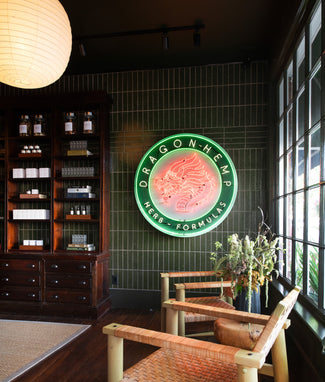
Dragon Hemp was established by Kevin Menard, LAc, a specialist in Sports Medicine Acupuncture and Traditional Chinese Medicine. Developed in his Sag Harbor clinic, our formulations bridge the gap between ancient herbal wisdom and modern cannabinoid research to address the root causes of pain, sleep, and wellness issues.
From our Rest & Restoration and Essential Wellbeing collections to our targeted Aches & Pains topicals, every product is formulated with organically grown botanicals and premium hemp extracts. We invite you to experience our sophisticated fusion of tradition and innovation at our flagship apothecary at 108 Main Street, Sag Harbor, or explore our full range of tinctures, gummies, and balms online.
Kevin Menard, LAc.
Kevin Menard, LAc., is the founder of Dragon Hemp and a licensed acupuncturist specializing in Sports Medicine Acupuncture and Traditional Chinese Medicine. He practices at his Sag Harbor clinic, where Dragon Hemp's formulas were developed.


