




Lion's Mane Mushroom and Brain Health — What the Research Says
|
|
Time to read 16 min
3rd Recovery Remedy Free • Code: R3COVER • Arthritis Awareness Month • SHOP NOW
|
|
Time to read 16 min
Hericenones and erinacines are the active neurotrophic compounds in Lion's Mane — only these two molecules stimulate Nerve Growth Factor in the brain.
The Mori 2009 randomized trial was the first double-blind human study to show measurable cognitive improvement after 16 weeks of oral Lion's Mane.
Dual extraction is non-negotiable. Hericenones are alcohol-soluble; beta-glucans are water-soluble. A water-only extract leaves the brain compounds behind.
Fruiting bodies are the medicine — most retail supplements are mycelium grown on grain, which floods the product with starch and dilutes the active compounds.
In Traditional Chinese Medicine, Lion's Mane clears Dampness from the Sea of Marrow — the metabolic stagnation that prevents the brain from being properly nourished by Kidney Jing.
250mg of dual-extracted fruiting body is the working clinical dose referenced in published trials for cognitive endpoints.
Energy Gummies deliver exactly 250mg of dual-extracted organic Lion's Mane fruiting body, paired with THCV, CBC, and Yerba Mate in a practitioner-formulated daytime cognitive matrix.
Table of Contents
The Short Answer: Clinical research on Lion's Mane mushroom (Hericium erinaceus) demonstrates that two classes of compounds — hericenones, found in the fruiting body, and erinacines, found in the mycelium — cross the blood-brain barrier and stimulate the synthesis of Nerve Growth Factor (NGF), a neurotrophic protein that supports the maintenance and repair of neurons. The 2009 Mori trial published in Phytotherapy Research showed measurable cognitive improvement in adults with mild cognitive impairment after 16 weeks of oral supplementation. The clinical effect requires dual-extracted, organic fruiting bodies dosed at a minimum of 250mg daily — a standard the vast majority of retail mushroom supplements fail to meet.
This piece is published in observance of Mental Health Awareness Month in May. The nervous system never lies. The fatigue, the missing words, the persistent fog — these are not character failings or signs of inevitable decline. They are biology. And there is a body of research that takes them seriously.
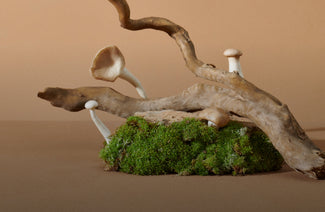
Lion's Mane (Hericium erinaceus) is a medicinal mushroom with a long history in East Asian herbalism and a growing footprint in modern neuroscience research. Its common name comes from the appearance of its fruiting body — a dense, white, cascading structure resembling a lion's mane.
In the practitioner's apothecary, Lion's Mane occupies a specific clinical role. It is not a stimulant. It is not an adaptogen in the sense that ashwagandha is an adaptogen. It belongs to a smaller category of botanicals that act on the structural architecture of the nervous system itself — supporting the maintenance of neurons, the integrity of the myelin sheath, and the formation of new synaptic connections.
The biological mechanism behind this activity is now well-characterized. The fruiting body of Lion's Mane contains a class of small molecules called hericenones, and the mycelium produces a related class called erinacines. Both compound families have been shown to stimulate the synthesis of Nerve Growth Factor (NGF), a neurotrophic protein first identified in the 1950s by Rita Levi-Montalcini, work that earned her the Nobel Prize in Physiology or Medicine.
NGF is one of the body's primary biological signals for the maintenance and repair of neurons. As the nervous system ages, endogenous NGF production declines. That decline correlates closely with the symptoms I see described in the consult room every week — the slower word retrieval, the missing names, the persistent fog that wasn't there a decade ago. I want patients to understand that this decline is not inevitable. It is biological. And there are botanicals that influence it.
When patients ask whether Lion's Mane actually works for the brain, they deserve a direct answer rather than the hedged consensus the supplement aisle tends to produce. The honest practitioner read on the evidence is this.
The foundational human clinical trial on Lion's Mane and cognitive function was published by Mori and colleagues in 2009 in the journal Phytotherapy Research. Researchers in Japan recruited 30 adults with mild cognitive impairment, randomized them in a double-blind, placebo-controlled design, and administered either Lion's Mane (3 grams of dried powder daily) or placebo for 16 weeks.
The Lion's Mane group showed statistically significant improvement on the Revised Hasegawa Dementia Scale — a standardized cognitive assessment — at 8, 12, and 16 weeks compared to placebo. When supplementation stopped, the cognitive scores in the treatment group declined back toward baseline. This is what a real signal looks like in a clinical trial: dose-dependent, time-dependent, and reversible.
This was a small study. The reader should understand that. But it is also the trial that opened the field, and subsequent research has continued in the same direction.
Ten years later, Saitsu and colleagues published a 2019 trial in Biomedical Research examining Lion's Mane in healthy older adults without cognitive impairment. After 12 weeks of daily supplementation, the treatment group showed improvements on the Mini Mental State Examination relative to placebo.
Two findings matter here. First, the cognitive effect was demonstrated in a population that was not impaired — meaning Lion's Mane is not solely a remediative agent but also a supportive one. Second, the effect emerged at a dose lower than the Mori trial used, suggesting that extraction quality and bioavailability — not just gross dose — drive the clinical outcome.
A separate line of research has examined Lion's Mane's effect on mood. Nagano and colleagues, in 2010, published a small trial in menopausal women showing reductions in self-reported anxiety and depression after four weeks of Lion's Mane supplementation. The hypothesized mechanism is hippocampal: NGF is densely active in the hippocampus, the brain region responsible for emotional processing as well as memory consolidation.
This explains a clinical observation I see consistently in practice. Patients who begin Lion's Mane for cognitive reasons will often come back at the eight-week follow-up and mention, almost as an afterthought, that they have been feeling steadier in mood. They did not start the protocol for that reason. The structural repair of the hippocampus is the same mechanism behind both effects.
Beyond the human trials, an extensive body of animal and in vitro work has characterized the mechanism. Lai and colleagues, in 2013, demonstrated that Lion's Mane extracts induced neurite outgrowth in cultured neurons — a direct visualization of the structural repair process. Multiple animal studies have shown remyelination and neuroprotective effects in models of nerve injury and neurodegeneration.
This is what allows the practitioner to speak confidently about mechanism. The molecular pathway from hericenone exposure to NGF synthesis to neurite outgrowth is no longer hypothetical. It is mapped.
The biomedical research is robust. But the herbalists who have used Lion's Mane for centuries described its action through a different framework — and the framework deserves a hearing, because it predicts the same clinical outcomes by a different route.
In Traditional Chinese Medicine, the brain is referred to as the Sea of Marrow (髓海). The Sea of Marrow is the structural and functional substrate of cognition. It is the physical tissue in which thought, memory, and clarity arise. And it is filled and replenished — slowly, over a lifetime — by Kidney Jing, the constitutional reserve we are born with and gradually deplete.
Two patterns degrade the Sea of Marrow over time. The first is Jing depletion — the long, slow erosion of constitutional reserve through overwork, chronic stress, poor sleep, and aging. This is the territory the Wellness Tincture and the broader article on CBD for focus and brain clarity address: the Heart-Kidney axis, the anchoring of Shen, the long-haul replenishment of the substrate.
The second pattern is Dampness — the metabolic stagnation that obstructs the Sea of Marrow even when Jing is intact. Dampness presents as the heavy-headed mental fog, the muddy slowness on waking, the inability to recall words that you know you know. In TCM terms, Dampness in the brain is what prevents Jing from doing its work. The reservoir is full; the channels are blocked.
This is the clinical territory where Lion's Mane lives. It is the agent that clears the Dampness so the substrate can do its job. The herb does not replace Kidney tonics; it works alongside them. It clears the obstruction so the replenishment can be felt.
This framing is useful because it tells us when and how to use Lion's Mane. Morning, when Yang Qi is rising and the Sea of Marrow needs to be cleared for the day ahead. Daily, because clearing Dampness is a continuous process, not an event. And paired with a constitutional anchor — because clearing without replenishing is the protocol error most patients make.
The single most important clinical fact about Lion's Mane is that the research evidence applies to a specific kind of preparation. The vast majority of retail mushroom supplements do not match that specification — and consumers who try them and feel nothing have, almost always, encountered the supply chain problem rather than the herb's limits.
Three quality variables determine whether a Lion's Mane product can deliver what the research describes.
The fruiting body is the visible, above-ground mushroom — the cascading "mane." It contains the highest concentration of hericenones and beta-glucans. The mycelium is the underground root structure — useful in its own right, particularly for erinacines, but rarely sold as pure mycelium in commercial supplements.
What is sold as "mycelium" in the retail supplement aisle is almost always a product called mycelium-on-grain. Industrial growers cultivate mycelium on a bed of oats or rice, and at the end of the cycle they grind the entire mass — mycelium plus residual grain — into a powder. Independent laboratory analyses of these products have repeatedly shown that the final powder is largely starch, with a fraction of the beta-glucan content of true fruiting body extracts.
A practitioner-grade Lion's Mane product is made from 100% organic fruiting bodies. The label will say so explicitly. If it does not, assume mycelium-on-grain.
The two active compound families in Lion's Mane have different solubility profiles. Beta-glucans are water-soluble. Hericenones are alcohol-soluble. A water extraction alone — the method behind a traditional decoction or tea — captures the immune-modulating beta-glucans but leaves the brain-active hericenones trapped in the mushroom fiber.
This is why the traditional Lion's Mane tea, beautiful as the ritual is, cannot deliver the cognitive endpoint that the clinical research describes. A complete extract requires both a water phase and an alcohol phase — the dual-extraction process — and the two extracts are then recombined.
When evaluating a supplement, the label should specify "dual-extracted." If it specifies only "hot water extract" or does not specify the extraction method at all, the hericenones are likely not present in clinically relevant concentrations.
The Mori trial used 3 grams of dried powder daily. The Saitsu trial used 1.05 grams of an extract. Other trials have used doses between 500mg and 3,000mg. The threshold dose at which clinical effects on cognitive endpoints appear in the published literature, when adjusted for extract concentration and bioavailability, sits around 250mg of dual-extracted, fruiting-body-only material.
Below that threshold, retail products may produce a placebo effect or general feelings of well-being, but they are not delivering the structural neurotrophic action the research describes. Above that threshold, the published evidence base supports a real biological effect.
The standard practitioner objection to gummies is that they are imprecise — that the candy format dilutes the medicine. We share that concern, which is why the Energy Gummies are formulated to a clinical specification rather than a flavor specification.
Each gummy contains:
250mg of dual-extracted, 100% organic Lion's Mane fruiting body — at the published-literature threshold for cognitive effect.
50mg of Yerba Mate — a metabolic lift without the adrenal tax of high-dose caffeine, providing the morning Yang Qi push that complements Lion's Mane's Dampness-clearing action.
5mg of THCV — a non-impairing minor cannabinoid that supports daytime focus and metabolic regulation through the CB1 receptor's neutral-antagonist binding profile.
5mg of CBC — a non-psychoactive cannabinoid that research has shown influences adult neural progenitor cell viability, complementing Lion's Mane's NGF activity through a parallel mechanism.
The point of the formulation is not to add ingredients. The point is that each ingredient addresses the same clinical territory — daytime cognitive vigor, structural neural support, ECS modulation — through a different molecular pathway. The combination compounds clinically because the mechanisms are non-overlapping.
Lion's Mane is not a complete protocol. It is one component of one. Patients serious about cognitive maintenance need the full architecture, which moves through the day in TCM rhythm.
Morning (clearing the Sea of Marrow): Energy Gummies taken with breakfast. The Lion's Mane clears Dampness; the Yerba Mate supports the rising Yang; the THCV and CBC provide ECS-level focus support without impairment. This is the structural-repair morning anchor.
Midday (sustaining the work): Hydration, deliberate rest from screen exposure, mindful movement — the things that prevent the cortisol cascade from undoing the morning's work. No second dose of Energy Gummies; the formulation is built for once-daily use.
Evening (replenishing the substrate): Wellness Tincture taken in the early evening. The Full-Spectrum CBD on a certified organic base anchors the Heart-Kidney axis and supports the deep, slow-wave sleep during which the glymphatic system flushes the metabolic waste that produces tomorrow's brain fog. This is where Jing is replenished.
For patients addressing more entrenched cognitive symptoms, this protocol is the foundation. The pieces on brain fog as a clinical entity, how cortisol degrades cognitive function, and Kidney Jing deficiency as the TCM root of mental fatigue explore the surrounding territory in depth.
Formulated to sharpen focus and provide a steady lift precisely when you need it.
A synergistic blend of Lion’s Mane, Yerba Mate, and functional cannabinoids (CBC & THCV)—ingredients selected to support healthy cognitive function and natural energy levels throughout the day. This plant-based formulation helps you maintain a steady, grounded momentum throughout your day, without the spikes and crashes of traditional caffeine.
Because your vitality shouldn’t borrow from tomorrow—and staying sharp shouldn't mean feeling jittery.
The research on Lion's Mane is real and growing. It is also, by the standards of pharmaceutical evidence, early. There are no large-scale Phase III trials. There is no FDA approval for any cognitive condition. The Mori 2009 trial enrolled thirty people. The replication studies have been similarly small.
What we have is a coherent and converging body of evidence — mechanism, animal, and human — that points in the same direction. We treat that as actionable for the supportive maintenance of cognitive function in healthy adults. We do not treat it as a treatment for diagnosed neurological disease. Patients with Alzheimer's, Parkinson's, or other diagnosed conditions should be in care with a neurologist; Lion's Mane belongs in the conversation, but it does not replace that care.
This is the practitioner's standard: use the best available evidence to support biological equilibrium, and be honest with the patient about where the evidence ends.
Lion's Mane is one of a small number of botanicals where the modern research and the traditional clinical use have converged on the same answer through different vocabularies. The herbalist who described it as clearing Dampness from the Sea of Marrow and the neuroscientist who measured hericenone-induced NGF synthesis are describing the same phenomenon. That convergence is rare, and it is what gives the practitioner the confidence to formulate around it.
The research is honest about its limits. The trials are small. The replication base is growing but not yet definitive. What we have is a coherent, mechanism-supported, traditionally-validated, and clinically-trialed botanical that warrants a place in a serious adult cognitive protocol — provided the source material, the extraction, and the dose meet the clinical specification.
That specification is what the Energy Gummies are built around. 250mg of dual-extracted, 100% organic fruiting body, paired with the metabolic and ECS support that compounds the clinical effect. It is the formulation we use ourselves. It is the formulation we would put a patient on without reservation.
The next step, if the read on the evidence resonates, is the 90-day trial — because that is the timeline on which the structural changes the research describes actually occur.
Direct Answer: Clinical research, including the 2009 Mori randomized trial and the 2019 Saitsu replication, shows measurable improvements in cognitive function with 12–16 weeks of oral Lion's Mane supplementation, mediated by hericenones and erinacines that stimulate Nerve Growth Factor.
Clinical Context: The research evidence is real but applies specifically to dual-extracted, organic-fruiting-body preparations at clinically meaningful doses (around 250mg of extract daily). Most retail Lion's Mane supplements fail to meet this specification, which is the most common reason consumers report no effect.
Direct Answer: Published clinical trials have used doses ranging from 1 to 3 grams of dried powder daily, which corresponds to approximately 250mg of dual-extracted concentrated fruiting body — the clinical threshold dose.
Clinical Context: Dose alone is not the variable that matters; extract concentration, dual-extraction quality, and source material (fruiting body vs. mycelium-on-grain) determine whether the active hericenones are present in bioavailable form. A 1,000mg capsule of mycelium-on-grain often contains less effective compound than 250mg of properly extracted fruiting body.
Direct Answer: Cognitive effects in published clinical trials emerged at 8 to 12 weeks of consistent daily use, with measurable improvement on standardized cognitive scales by week 16.
Clinical Context: Lion's Mane supports structural neural repair, which is a slow biological process. Patients should commit to a minimum 90-day trial before assessing the cognitive effect. Subjective improvements in mood and energy often precede the cognitive changes by several weeks.
Direct Answer: The fruiting body is the visible above-ground mushroom and contains the highest concentration of hericenones and beta-glucans. Mycelium is the underground root structure, but most "mycelium" supplements are actually mycelium-on-grain — a starch-heavy byproduct with significantly reduced active compound content.
Clinical Context: Independent laboratory analyses have consistently shown that mycelium-on-grain products contain a fraction of the beta-glucan content of true fruiting body extracts. For cognitive endpoints, 100% organic fruiting body is the practitioner standard.
Direct Answer: Yes. Lion's Mane works through neurotrophic mechanisms, not stimulant pathways, and pairs well with mild metabolic stimulants like Yerba Mate or moderate coffee intake.
Clinical Context: The Energy Gummies formulation pairs 250mg of dual-extracted Lion's Mane with 50mg of Yerba Mate precisely because the two work through complementary, non-overlapping mechanisms — one supports neural structure, the other supports daytime metabolic Yang Qi. Heavy coffee consumption alongside Lion's Mane is unnecessary and may produce adrenal fatigue that undermines the protocol.
Direct Answer: Lion's Mane has an extensive history of safe culinary and medicinal use, and clinical trials of 12 to 16 weeks have reported no significant adverse effects beyond mild gastrointestinal discomfort in a small percentage of participants.
Clinical Context: Patients with diagnosed mushroom allergies should avoid Lion's Mane. Patients on blood thinners or scheduled for surgery should consult their physician, as some research suggests medicinal mushrooms may modestly affect platelet function. For the healthy adult, daily long-term use is well-supported by both the research literature and centuries of traditional practice.
Direct Answer: Lion's Mane is not equivalent to and does not replace prescription medications for diagnosed cognitive conditions. It is a botanical that supports the structural maintenance of healthy neural function in adults without diagnosed disease.
Clinical Context: Patients with diagnosed Alzheimer's, Parkinson's, or other neurodegenerative conditions should remain in active care with a neurologist. Lion's Mane may have a supportive role within that care, but the conversation belongs in the consultation room, not the supplement aisle.
Dragon Hemp was established by Kevin Menard, LAc, a specialist in Sports Medicine Acupuncture and Traditional Chinese Medicine. Developed in his Sag Harbor clinic, our formulations bridge the gap between ancient herbal wisdom and modern cannabinoid research to address the root causes of pain, sleep, and wellness issues.
From our Rest & Restoration and Essential Wellbeing collections to our targeted Aches & Pains topicals, every product is formulated with organically grown botanicals and premium hemp extracts. We invite you to experience our sophisticated fusion of tradition and innovation at our flagship apothecary at 108 Main Street, Sag Harbor, or explore our full range of tinctures, gummies, and balms online.
Kevin Menard, LAc.
Kevin Menard, LAc., is the founder of Dragon Hemp and a licensed acupuncturist specializing in Sports Medicine Acupuncture and Traditional Chinese Medicine. He practices at his Sag Harbor clinic, where Dragon Hemp's formulas were developed.


