






CBD for Focus and Brain Clarity
|
|
Time to read 15 min
Buy 2, Get 1 Free | 40% OFF $250+
50% OFF $500+ | Shop Now
|
|
Time to read 15 min
Brain fog is a regulation failure, not a stimulant deficiency — caused by elevated cortisol, neuroinflammation, and ECS dysregulation, not by a missing neurochemical.
CBD inhibits FAAH, the enzyme that breaks down anandamide, allowing the brain's own calming and anti-inflammatory signals to remain active longer.
The prefrontal cortex degrades under chronic stress — clinical research shows measurable loss of dendritic spines, with direct cognitive consequences.
TCM identifies two underlying patterns: Kidney Jing depletion (constitutional reserve) and Heart-Kidney disconnect (Shen unanchored).
Hemp plays a messenger-herb role in our formulations — anchoring the Shen and supporting the restoration of the Heart-Kidney axis.
Cognitive recovery is cumulative — meaningful improvement typically emerges at 2 to 4 weeks of consistent daily use, not after a single dose.
Wellness Tincture is the daily anchor — 60mg full-spectrum CBD per dose on a certified organic base, formulated to support the Heart-Kidney axis.
Table of Contents
The Short Answer: CBD supports focus and brain clarity by interacting with the endocannabinoid system, which regulates stress response, neuroinflammation, and neurotransmitter balance in the prefrontal cortex. By inhibiting FAAH — the enzyme that breaks down anandamide — CBD extends the brain's own calming and anti-inflammatory signals. In Traditional Chinese Medicine, the same cognitive symptoms — scattered thinking, mental fatigue, poor memory — trace to Kidney Jing depletion and a disconnect between the Heart and Kidney organ systems. Addressing both pathways simultaneously produces more durable results than stimulants alone, which mask the symptom without addressing the underlying regulation failure.
It is not laziness. It is not weakness. It is biology — and it is increasingly common.
The patients I see in clinic describe the same constellation of symptoms with remarkable consistency. The fractured attention. The word that won't come. The hour that disappears in the gap between intention and execution. The conventional response is more caffeine, more pressure, more willpower. None of it works for long. The fog returns. Often it returns harder.
This is because the conventional response treats the symptom as a stimulant deficiency. It is not. It is a regulation failure. And the regulation in question — the one your brain is failing to perform — is the one CBD was clinically designed to support.
Before CBD enters the conversation, the underlying mechanism deserves to be understood. Skipping to the product recommendation misses the point.
The prefrontal cortex is the brain's seat of executive function — working memory, sustained attention, decision-making, the cognitive infrastructure of deep work. It is also one of the most stress-sensitive regions of the brain.
Under chronic pressure, catecholamine signaling floods the prefrontal cortex. The result is a paradox: in short bursts, this sharpens threat response and accelerates reflex. Sustained over weeks and months, it does the opposite. It opens potassium channels that weaken synaptic connectivity. It causes the loss of dendritic spines — the small protrusions on neurons that form the structural basis of neural communication. It impairs neuroplasticity. Research published in PMC has shown that chronic stress produces measurable loss of prefrontal dendritic architecture, with corresponding cognitive impairment.
The system designed to keep you alive in a brief crisis becomes the system that erodes your ability to think clearly when the crisis becomes your daily life.
Neuroinflammation compounds the problem. When the immune system is chronically activated — by stress, poor sleep, processed food, environmental load, alcohol — inflammatory cytokines cross the blood-brain barrier and interfere with neural signaling. The result is exactly what brain fog feels like from the inside: signals that don't fire cleanly, thoughts that don't complete, attention that won't hold.
The patient sitting across from me is not failing. The patient's regulation is failing. There is a meaningful difference, and the difference is the entire reason the protocol works.
The endocannabinoid system (ECS) is one of the body's master regulatory networks. Its receptors — CB1 and CB2 — are distributed throughout the brain and nervous system, with particularly dense concentrations in the prefrontal cortex, hippocampus, and amygdala. This is not coincidence. The ECS is the body's homeostatic dial for stress, inflammation, and emotional regulation.
CBD does not bind directly to these receptors. Instead, it inhibits the enzyme FAAH (fatty acid amide hydrolase), which is responsible for breaking down the body's own endocannabinoid, anandamide. By slowing that breakdown, CBD effectively raises anandamide levels — allowing the brain to sustain its own calming, anti-inflammatory signals for longer than it otherwise would. A clinical study in Translational Psychiatry confirmed that CBD inhibits FAAH activity and raises serum anandamide, with the magnitude of anandamide increase significantly associated with cognitive and clinical improvement.
The downstream effects on focus and brain clarity are not theoretical:
Cortisol regulation. CBD interacts with the hypothalamic-pituitary-adrenal (HPA) axis to blunt excessive stress-hormone output. This is the direct biological reversal of the prefrontal degradation described above. The deeper mechanism is explored in the related article on CBD and cortisol.
Neuroinflammation reduction. CBD's interaction with CB2 receptors modulates microglial activity — the brain's resident immune cells — reducing the inflammatory signaling that produces the subjective experience of cognitive fog.
Neurotransmitter stabilization. Through modulation of the TRPV1 receptor and indirect influence on serotonin signaling, CBD helps stabilize the neurotransmitter environment that executive function depends on. This is not a dopamine spike. It is a stabilization of the conditions under which dopamine signaling can do its job.
Anxiolytic effect without sedation. Unlike THC, CBD does not produce intoxication. At appropriate doses, it reduces the anxiety-driven mental noise that is one of the primary disruptors of sustained attention — without inducing drowsiness.
The net effect is not a stimulant response. It is a recalibration. The brain is returned to a state in which its own clarity mechanisms can function. This distinction matters enormously, and it is the reason patients who have failed on stimulants succeed on this protocol.
Traditional Chinese Medicine has mapped the terrain of cognitive dysfunction for over two thousand years. It uses different vocabulary than modern neuroscience, but the clinical precision is the same — and in some respects sharper, because it has had longer to refine the diagnostic categories.
In TCM, the brain is governed by the Kidney organ system. The Kidneys store Jing — the body's deepest constitutional reserve. Western physiology maps loosely onto this concept: Jing is what we might describe as the intersection of genetic potential, hormonal vitality, neurotrophic factor reserves, and neurological resilience. It is the substrate on which all higher cognitive function is built.
When Jing is depleted — through overwork, chronic stress, insufficient sleep, sustained alcohol consumption, or simple aging — the brain loses its nourishment. The clinical presentation is the one I see weekly in practice: poor short-term memory, inability to concentrate, mental fatigue that does not resolve with rest, a pervasive cognitive dullness. The piece I wrote on Kidney Jing deficiency as the TCM root of mental fatigue explores this pattern in depth.
The second TCM pattern underlying brain fog is the Heart-Kidney disconnect. In TCM physiology, the Heart governs the Shen — the spirit, the conscious mind, the seat of clear thought. The Kidneys, through their water energy, cool and anchor the Heart's fire. When this axis is disrupted — typically by stress, anxiety, or chronic sleep deprivation — the result is a racing, scattered mind that cannot settle into focused work. The mind is active but unproductive. Present but not clear. Awake at 3 a.m. with the inability to sleep, then foggy at 10 a.m. with the inability to think.
In modern practitioner application, hemp plays a messenger-herb role in our formulations — its calming, descending quality helps anchor the Shen and supports the restoration of the Heart-Kidney connection. This is not metaphor. It is a clinical pattern with diagnostic criteria and a long history of herbal intervention — and it is the framework the Wellness Tincture is formulated against.
Addressing cognitive fog through both the ECS and the TCM pathways requires more than a single compound. The protocol below is the one I prescribe in practice.
The Wellness Tincture is the anchor. 60mg of full-spectrum CBD per dose on a certified organic base, formulated to support the ECS at the regulatory level. Take sublingually each morning, ideally 20 to 30 minutes before the most cognitively demanding work of the day begins. Hold under the tongue for 60 to 90 seconds before swallowing to maximize sublingual absorption.
This is the daily replenishment of the substrate. It is what the TCM tradition would call the Jing-supportive practice. It is not acute. It is structural.
Formulated to fortify your baseline and invite a sense of steady composure—day in and day out.
This Certified Organic formula features pure, full-spectrum CBD—selected to support a healthy inflammatory response and daily immune function. This pure, restorative ritual works systemically to build a resilient shield against the physical and mental wear of modern life, ensuring you remain adaptable regardless of what the day demands.
Because true balance is cumulative—and a strong foundation makes every day effortless.
When the primary driver of poor focus is anxiety or mental overwhelm — the racing-mind pattern of the Heart-Kidney disconnect — Calming Gummies are the targeted intervention. 25mg of full-spectrum CBD per gummy. Use as needed. The clinical role is to quiet the noise so the clarity beneath it can surface.
Formulated to ground the nervous system and invite a gentle return to center—without dulling your senses.
This precise dose of Full-Spectrum CBD—selected to help buffer the overstimulation of modern life and quiet the mental noise of a demanding day—supports a resilient reset whenever you need it most. This clean, plant-based approach helps you navigate life's sharpest stressors with a sense of composed clarity.
Because a moment of pause shouldn’t be a luxury—and finding your balance should be effortless.
For patients who want to move beyond foundational regulation toward active cognitive enhancement, Energy Gummies add a distinct mechanism: 250mg of dual-extracted, organic Lion's Mane fruiting body, paired with Yerba Mate, THCV, and CBC. This is not a CBD product. It works through Nerve Growth Factor (NGF) synthesis — a structural neural support pathway that complements the ECS regulation provided by the Wellness Tincture. The detailed clinical evidence is documented in the related article on Lion's Mane and brain health.
Formulated to sharpen focus and provide a steady lift precisely when you need it.
A synergistic blend of Lion’s Mane, Yerba Mate, and functional cannabinoids (CBC & THCV)—ingredients selected to support healthy cognitive function and natural energy levels throughout the day. This plant-based formulation helps you maintain a steady, grounded momentum throughout your day, without the spikes and crashes of traditional caffeine.
Because your vitality shouldn’t borrow from tomorrow—and staying sharp shouldn't mean feeling jittery.
The full sequencing of these three products into a daily routine — what to take when, what to expect in week one versus week four — is the subject of the morning cognitive protocol guide.
CBD for focus is not a pre-task stimulant. It is a daily regulatory practice. The clinical mistakes patients make are predictable, and they are correctable.
Brain fog and poor concentration are downstream symptoms of upstream dysregulation: elevated stress hormones, neuroinflammation, depleted Kidney Jing, a destabilized Heart-Kidney axis. CBD addresses focus and brain clarity not by forcing the brain into an artificial state, but by restoring the physiological conditions — balanced cortisol, reduced neuroinflammation, calm nervous system, anchored Shen — under which the brain's own clarity mechanisms can function.
The protocol I prescribe:
Wellness Tincture — daily ECS regulation and TCM Heart-Kidney support. The non-negotiable foundation.
Calming Gummies — targeted anxiety and mental noise reduction. As needed.
Energy Gummies — complementary NGF support for active cognitive enhancement. For patients who want to move beyond regulation toward structural neural maintenance.
This is not a shortcut. It is a clinical recalibration. The brain given the right conditions will find its own clarity. That is the entire premise of the practice.
The work I do in clinic comes back, again and again, to the same insight: the symptom the patient walks in with is rarely the problem. The brain fog is real. The fatigue is real. The lost hour at the desk is real. But these are signals, not the underlying pathology. The pathology is regulation — of stress, of inflammation, of the constitutional substrate the modern life depletes.
CBD is not the answer alone. The Wellness Tincture is not a magic compound. What it is, when taken consistently, is the practitioner's tool for restoring the regulatory conditions under which the brain can do its work. The Lion's Mane in Energy Gummies adds structural neural support. The Calming Gummies quiet the noise. Together, the protocol is the apothecary version of what the clinical research and the TCM tradition both recommend, and have recommended for as long as either tradition has existed.
If the diagnosis here resonates, the protocol is documented in the spokes that surround this pillar. The morning cognitive protocol guide is the practical sequencing. Our Lion's Mane and brain health review is the deep dive on NGF. Our article on CBD and cortisol covers the mechanism on the stress side. Our article on Kidney Jing deficiency is the TCM substrate. Our piece on brain fog is the symptom-defining read for anyone not yet ready for the full protocol.
Meet the brain where it is. Give it what it needs. Let it do the rest.
Direct Answer: Yes. CBD supports focus by regulating the endocannabinoid system, reducing cortisol output, and lowering neuroinflammation — the three primary drivers of impaired executive function. It does not produce a stimulant effect; it improves the underlying physiological conditions for sustained attention.
Clinical Context: The prefrontal cortex — responsible for focus, working memory, and decision-making — is degraded by chronic stress signaling and inflammatory load. CBD's modulation of the HPA axis and CB2 receptors addresses both mechanisms, producing cognitive clarity through regulation rather than stimulation. The effect is cumulative, not acute.
Direct Answer: Acute anxiety reduction and mental calming typically emerge within 20 to 60 minutes of taking CBD. Meaningful improvement in sustained focus and brain clarity emerges after 2 to 4 weeks of consistent daily use.
Clinical Context: CBD's effects on neuroinflammation and HPA axis regulation are cumulative. The ECS recalibrates toward homeostasis gradually — consistent daily dosing allows the system to stabilize cortisol rhythms and reduce baseline inflammatory load over time. Patients who report no benefit after a single dose have not given the mechanism enough time to operate.
Direct Answer: A daily sublingual tincture provides the most consistent ECS support. Look for full-spectrum CBD on a certified organic base for the broadest entourage effect.
Clinical Context: Standard oil-based CBD tinctures absorb sublingually, bypassing first-pass liver metabolism for more predictable bioavailability. Full-spectrum extracts retain the minor cannabinoids and terpenes that contribute to the entourage effect — the synergistic interaction that distinguishes a clinical formulation from an isolate.
Direct Answer: Yes. CBD addresses two primary physiological drivers of brain fog: excess stress hormone output and neuroinflammation. By modulating the HPA axis and CB2 receptors in the brain's immune cells, CBD helps clear the signaling interference that creates the subjective experience of mental fog.
Clinical Context: In Traditional Chinese Medicine, brain fog corresponds to Kidney Jing deficiency and Heart-Kidney axis disruption. Hemp's role in modern practitioner formulations is to anchor the Shen and support the descending, settling energy that allows clear, sustained thought.
Direct Answer: At appropriate doses, no. CBD taken in the morning supports focus without producing sedation. Sedation on CBD is almost always a sign of too-high initial dosing for that patient's ECS sensitivity.
Clinical Context: The clinical mistake patients make most often is starting at the full recommended dose and experiencing mild drowsiness. The fix is titration, not abandonment. Begin at the lower end of the dose range — a half-dropper of the Wellness Tincture for the first week — then increase as needed. At the right dose, the experience is anchored alertness, not stimulation. What patients describe is the absence of the morning anxiety spike that drives the late-day cognitive crash.
Direct Answer: Yes. Lion's Mane contains hericenones and erinacines, compounds shown in clinical research to stimulate Nerve Growth Factor (NGF) synthesis, which supports the maintenance of neurons involved in learning, memory, and cognitive processing.
Clinical Context: NGF is essential for the survival and function of cholinergic neurons in the basal forebrain, a region critical to attention and working memory. Lion's Mane complements CBD's regulatory effects through a parallel structural mechanism. The Energy Gummies combine 250mg of dual-extracted Lion's Mane fruiting body with THCV, CBC, and Yerba Mate. The full clinical evidence is reviewed in our review of Lion's Mane research and brain health.
Direct Answer: Kidney Jing is the body's deepest constitutional reserve in Traditional Chinese Medicine — governing neurological vitality, hormonal resilience, and cognitive sharpness. Depletion through overwork, chronic stress, or aging manifests as poor memory, scattered attention, and mental fatigue.
Clinical Context: Western physiology maps loosely onto this framework: Jing depletion correlates clinically with HPA axis burnout, reduced neuroplasticity, and declining neurotrophic factor levels. Herbal formulas that tonify Jing, combined with hemp-derived CBD, address both the TCM pattern and its physiological correlates simultaneously.
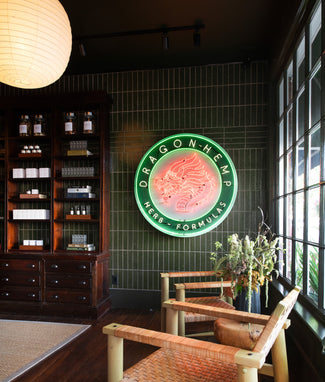
Dragon Hemp was established by Kevin Menard, LAc, a specialist in Sports Medicine Acupuncture and Traditional Chinese Medicine. Developed in his Sag Harbor clinic, our formulations bridge the gap between ancient herbal wisdom and modern cannabinoid research to address the root causes of pain, sleep, and wellness issues.
From our Rest & Restoration and Essential Wellbeing collections to our targeted Aches & Pains topicals, every product is formulated with organically grown botanicals and premium hemp extracts. We invite you to experience our sophisticated fusion of tradition and innovation at our flagship apothecary at 108 Main Street, Sag Harbor, or explore our full range of tinctures, gummies, and balms online.
Kevin Menard, LAc.
Kevin Menard, LAc., is the founder of Dragon Hemp and a licensed acupuncturist specializing in Sports Medicine Acupuncture and Traditional Chinese Medicine. He practices at his Sag Harbor clinic, where Dragon Hemp's formulas were developed.


