


CBD and Depression: Understanding the Serotonin and ECS Connection
|
|
Time to read 10 min
Buy 2, Get 1 Free | 40% OFF $250+
50% OFF $500+ | Shop Now
|
|
Time to read 10 min
CBD is not a treatment or cure for depression. It does not replace therapy, medication, or care from a qualified professional.
Early research is mechanistic, not clinical proof. Studies explore how CBD interacts with serotonin signaling, mostly in preclinical and preliminary models.
The 5-HT1A receptor is the focus. CBD appears to influence this serotonin receptor, which helps explain the antidepressant-like effects seen in early studies.
The endocannabinoid system links to stress regulation. The ECS interacts with the HPA axis, the body's central stress-response pathway.
TCM frames low mood as stuck, depleted Qi. Traditional practice describes constrained flow and a Shen that needs nourishing and anchoring.
A daily foundation may offer gentle support. Many patients begin with the Wellness Tincture as one layer within a broader plan.
Table of Contents
The Short Answer: CBD is not a proven treatment for depression, and it should never replace therapy, medication, or professional care. Early research explores how CBD interacts with the 5-HT1A serotonin receptor and the endocannabinoid system, producing antidepressant-like effects in preclinical and preliminary human studies. This is mechanism-level science, not clinical proof. Depression is a serious medical condition. If you are struggling, speak with a physician or mental-health professional. For some people, a supportive wellness ritual may complement — never substitute for — that care. In the US, call or text 988 for immediate support.
September carries mental-health awareness into focus each year. It is a fitting moment to speak plainly about what CBD can and cannot do for mood — and to hold that conversation with care.
CBD is not a treatment for depression. It does not cure it. It does not replace the medication or therapy a person may need. I want that understood before we go any further.
What interests me as a practitioner is mechanism. And the mechanism here is genuinely compelling — while still early.
Depression is not one thing. It involves mood, motivation, sleep, energy, and the way the nervous system regulates stress over time. One area researchers study is serotonin signaling. Serotonin is a neurotransmitter tied to mood and emotional balance. Many conventional antidepressants work on this system.
Early research suggests CBD may interact with a specific serotonin receptor called 5-HT1A. A recent pharmacological review examined how CBD engages this receptor. In animal models and some preliminary work, this interaction produces what scientists cautiously call "antidepressant-like effects." That phrasing matters. It describes signals in early studies. It is not a claim that CBD treats clinical depression in people.
The same caution applies to related work. A frequently cited review of cannabidiol and anxiety found meaningful preclinical evidence for CBD's effects on stress and fear responses — again, mostly in animal and small human studies, and largely focused on anxiety rather than depression. Low mood and anxiety often travel together, which is why this research is relevant here. But relevance is not the same as proof.
So hold two truths at once. The science is interesting. The science is preliminary. Both are true.
The second mechanism worth understanding is the endocannabinoid system, or ECS.
The ECS is a regulatory network that runs throughout the body and brain. Think of it as a balancing system. It helps keep other systems within a healthy range — mood, sleep, appetite, and the stress response among them. It does this through its own signaling molecules and receptors.
Here is where depression enters the picture. The ECS interacts closely with the HPA axis. That is the hypothalamic-pituitary-adrenal axis — the central pathway that governs how the body releases cortisol and manages stress. Research on the endocannabinoid system and stress describes how these two systems are woven together.
Chronic stress and low mood are not separate stories. When the stress response stays switched on for months or years, it wears on the body and the mind. Sleep frays. Energy drops. Motivation thins out. That sustained load also registers in the cardiovascular system, a dimension we examine in our review of CBD and blood pressure research. For readers who want the deeper mechanism on stress hormones, our guide to CBD and cortisol covers it in full.
CBD's role, in early research, is to interact with this ECS network rather than to force any single outcome. The word I return to is support — one gentle input into a system that regulates itself. Not a lever that pulls a person out of depression.
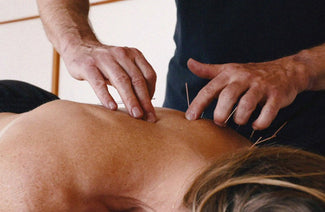
In my clinic, I see low mood through a second framework — Traditional Chinese Medicine. I offer this as a traditional lens for understanding patterns, not as a medical diagnosis.
In TCM, many presentations of low mood begin with Liver Qi stagnation. Qi is the body's vital energy, and its nature is to move. When it moves smoothly, we feel flexible and at ease. When it gets constrained — stuck — we feel it as that pressed-down, joyless, irritable heaviness. Things that should flow do not. Our companion article, a deep dive on Liver Qi stagnation, walks through this pattern in detail.
Over time, stagnation drains the system. In TCM terms, the Spleen Qi weakens, and we begin to see Heart-Spleen depletion. This is the fatigue, the poor motivation, the circling worry that so many people describe. And when depletion touches the Shen — the spirit or consciousness that governs the mind — sleep and emotional steadiness suffer.
The classical aim is twofold. Restore the smooth flow of Qi. Nourish and anchor the Shen.
Notice how this bridges to the science. Restoring smooth flow and calming a restless Shen is, in modern language, a conversation about the nervous system, serotonin signaling, and stress regulation. Two frameworks. One body. Both point toward balance rather than force.
A ritual is not a treatment. I want to keep saying that. What follows are supportive layers — never a substitute for professional mental-health care.
For a daily foundation, I most often begin patients with the Wellness Tincture. It is formulated to support the endocannabinoid system as a steady, once-daily practice. The goal is consistency — one small anchor in the day, working with the body's own regulatory system over time.
Formulated to fortify your baseline and invite a sense of steady composure—day in and day out.
This Certified Organic formula features pure, full-spectrum CBD—selected to support a healthy inflammatory response and daily immune function. This pure, restorative ritual works systemically to build a resilient shield against the physical and mental wear of modern life, ensuring you remain adaptable regardless of what the day demands.
Because true balance is cumulative—and a strong foundation makes every day effortless.
Low mood rarely arrives alone. When the anxious, ruminating edge is loud — the mind that will not stop circling — the Calming Gummies are designed to meet that quality. This is the stuck, constrained side of the pattern in TCM terms. And when that edge is sharpest in social settings — the dread of the room, the pressure of being seen — our guide to CBD for social anxiety meets that particular form.
Formulated to ground the nervous system and invite a gentle return to center—without dulling your senses.
This precise dose of Full-Spectrum CBD—selected to help buffer the overstimulation of modern life and quiet the mental noise of a demanding day—supports a resilient reset whenever you need it most. This clean, plant-based approach helps you navigate life's sharpest stressors with a sense of composed clarity.
Because a moment of pause shouldn’t be a luxury—and finding your balance should be effortless.
The other face of low mood is depletion. The flat mornings. The absent drive. For that dimension, the Energy Gummies are built for clean daytime momentum without a jittery push — supporting motivation on the days it feels out of reach.
Formulated to sharpen focus and provide a steady lift precisely when you need it.
A synergistic blend of Lion’s Mane, Yerba Mate, and functional cannabinoids (CBC & THCV)—ingredients selected to support healthy cognitive function and natural energy levels throughout the day. This plant-based formulation helps you maintain a steady, grounded momentum throughout your day, without the spikes and crashes of traditional caffeine.
Because your vitality shouldn’t borrow from tomorrow—and staying sharp shouldn't mean feeling jittery.
These rituals sit within real treatment. They do not replace it. If low mood is affecting your life, please read our complete guide to CBD and cannabis for anxiety for the wider picture, and speak with a professional.
One clinical caution, stated plainly. CBD can interact with antidepressants and other medications. Never stop or reduce any prescribed medication. Talk with your physician or pharmacist before combining CBD with anything you take.
I have sat with many people in that heavy, joyless place. I know how much they want a simple answer. I will not offer one, because it would not be honest.
CBD is not a cure for depression. The serotonin and ECS research is real and worth watching, but it is early, and it is mechanistic. What I believe in is a whole approach — professional care first, supported by the daily rituals and traditional wisdom that help the body find its balance again.
If you are struggling, reach out. Talk to a physician or a mental-health professional. In the US, you can call or text 988, the Suicide & Crisis Lifeline, any time. You deserve real support, and it is there.
— Kevin Menard, LAc.
Direct Answer: No. CBD is not a proven treatment or cure for depression, and it should never replace therapy, medication, or care from a qualified professional.
Clinical Context: Depression is a serious medical condition that warrants professional evaluation and treatment. Early research explores how CBD interacts with serotonin signaling and the endocannabinoid system, but these findings are preliminary and mechanistic — not clinical proof of effectiveness in people. Consider CBD, at most, a possible supportive layer within a broader plan directed by your physician or mental-health professional.
Direct Answer: Early research suggests CBD may interact with the 5-HT1A serotonin receptor, which is linked to mood, though this work is largely preclinical.
Clinical Context: Serotonin is a neurotransmitter central to emotional balance, and the 5-HT1A receptor is one of its key sites. In animal models and preliminary studies, CBD's engagement with this receptor produces what researchers call antidepressant-like effects. That phrasing describes early signals, not established outcomes in humans, so it should be read with genuine caution.
Direct Answer: Not without medical guidance. CBD can interact with antidepressants and other medications, so consult your physician or pharmacist first.
Clinical Context: CBD can affect how the body metabolizes certain medications, which may alter their levels or effects. Never stop or reduce a prescribed antidepressant on your own. The right move is a direct conversation with the prescriber who knows your full history before adding anything new.
Direct Answer: Traditional Chinese Medicine often frames low mood as Liver Qi stagnation and, over time, Spleen or Heart depletion — a traditional pattern, not a diagnosis.
Clinical Context: In TCM, Qi is meant to move freely; when it becomes constrained, we feel the stuck, joyless quality of low mood. Prolonged stagnation can deplete the system, producing fatigue, poor motivation, and worry, and can unsettle the Shen. The classical aim is to restore smooth flow and nourish the spirit — a supportive framework alongside professional care.
Direct Answer: The endocannabinoid system helps regulate stress, sleep, and mood, and interacts with the HPA axis that governs the body's stress response.
Clinical Context: The ECS functions as a balancing network throughout the body and brain. Because it is closely tied to the HPA axis, it sits at the intersection of chronic stress and low mood — two experiences that often reinforce each other. Research into CBD and the ECS is ongoing and early, and does not establish CBD as a treatment for any mental-health condition.
Direct Answer: Speak with a physician or mental-health professional. If you are in crisis, in the US call or text 988, the Suicide & Crisis Lifeline.
Clinical Context: Depression is treatable, and professional care — which may include therapy, medication, or both — makes a real difference. A wellness ritual is never a substitute for that care. If symptoms are affecting your daily life, or if you have any thoughts of self-harm, reach out to a professional or a crisis line right away.
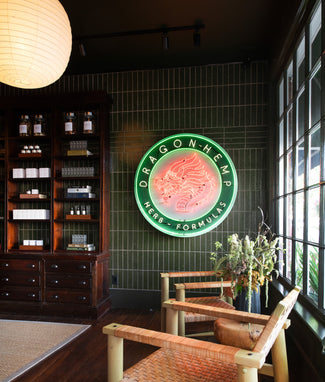
Dragon Hemp was established by Kevin Menard, LAc, a specialist in Sports Medicine Acupuncture and Traditional Chinese Medicine. Developed in his Sag Harbor clinic, our formulations bridge the gap between ancient herbal wisdom and modern cannabinoid research to address the root causes of pain, sleep, and wellness issues.
From our Rest & Restoration and Essential Wellbeing collections to our targeted Aches & Pains topicals, every product is formulated with organically grown botanicals and premium hemp extracts. We invite you to experience our sophisticated fusion of tradition and innovation at our flagship apothecary at 108 Main Street, Sag Harbor, or explore our full range of tinctures, gummies, and balms online.
Kevin Menard, LAc.
Kevin Menard, LAc., is the founder of Dragon Hemp and a licensed acupuncturist specializing in Sports Medicine Acupuncture and Traditional Chinese Medicine. He practices at his Sag Harbor clinic, where Dragon Hemp’s formulas are developed alongside his clinical work. His protocols integrate classical Chinese herbal medicine with modern cannabinoid research.


