


Calming Tea: A Practitioner's Guide to Chinese Herbal Tea for Stress and Sleep
|
|
Time to read 12 min
35% Off Storewide | 40% OFF $200+
50% OFF $400+ | Shop Now
|
|
Time to read 12 min
The Short Answer: The most effective calming tea is not a single herb — it is a timed ritual, designed around the body's natural cortisol and sleep cycles. In Chinese herbal medicine, Chrysanthemum (Ju Hua) is the classical calming tea for Liver Heat and Heart-Shen disturbance — cooling, precise, and time-tested. Chamomile is its most accessible Western equivalent, sharing the same cooling properties and apigenin-driven GABA-A receptor activity. Paired with Dragon Hemp's Wellness Tincture during the day and Sleep Tincture at night, either tea base becomes a complete calming protocol that addresses the biological root of both stress and poor sleep.
Table of Contents
For those who want the protocol first and the science second:
Morning or afternoon — Chrysanthemum or chamomile tea + Wellness Tincture Clears daytime cortisol accumulation. Supports nervous system equilibrium. Cools Liver Heat before it compounds.
30–45 minutes before bed — Chrysanthemum or chamomile tea + Sleep Tincture Initiates the sleep descent. Suan Zao Ren Tang nourishes Liver Blood and calms the Heart-Shen. Nano-cannabinoids active within 15 minutes.
The daytime ritual reduces what the nighttime ritual has to resolve. Read on for the full clinical explanation — or shop the protocol below.
In the West, tea is a beverage. In Chinese herbal medicine, it is a therapeutic delivery system — and timing is everything.
The body does not operate at a constant metabolic rate. It follows a precise 24-hour rhythm, governed by the Chinese Body Clock — a clinical framework mapping each organ system to its peak hours of activity. The Liver reaches its most active phase between 1:00 and 3:00 AM. The Heart governs the Shen — the spirit responsible for emotional ease and mental quiet — most vulnerably in the evening hours. When these systems are burdened by stress, hormonal fluctuation, or accumulated Heat, the result is a nervous system that cannot transition: too wired to rest, too depleted to focus.
A practitioner-designed calming tea ritual works with this rhythm rather than against it. Two windows. Two formulas. One complete protocol.
Most people treat daytime stress and nighttime waking as separate problems. They are the same problem — expressed at different hours.
Both are driven by cortisol dysregulation. Cortisol follows a natural daily arc, rising steeply in the morning to initiate wakefulness, then gradually declining through the day to allow the body to rest at night. When the hormonal systems that govern cortisol — primarily estrogen in women and testosterone in men — begin to decline, that arc distorts. Cortisol stays elevated longer during the day, creating the familiar feeling of being wired but tired. And it rises too early in the early morning hours, pulling the body out of restorative sleep by 3 AM.
In TCM, this pattern is called Liver Qi Stagnation combined with Heart-Shen disturbance. The Liver — the organ system most responsible for the smooth flow of Qi and the regulation of emotional energy — accumulates excess Heat when overburdened. That Heat disturbs the Heart-Shen, which governs mental quiet. The nervous system loses its ability to transition: from work to rest, from day to night, from wakefulness to deep sleep.
A targeted calming tea ritual addresses both ends of this cycle directly.
Before building the ritual, it helps to understand the two best tea bases for this protocol — and why both work.
Chrysanthemum (Ju Hua) is the classical TCM choice. Bitter in flavor, cooling in nature, and moving into the Liver and Lung channels, Chrysanthemum directly addresses the excess Liver Heat that drives both daytime stress and the 3 AM wake-up. It has been used in Chinese herbal medicine for centuries specifically for this pattern — to clear Heat from the Liver, calm the mind, and support the smooth flow of Qi. If you can source dried chrysanthemum flowers, this is the practitioner's recommendation.
Chamomile is the most accessible Western equivalent. Botanically related to chrysanthemum — both belong to the Asteraceae family — chamomile shares its cooling, Heat-clearing properties and its action on the Liver channel. Its active compound, apigenin, binds to GABA-A receptors in the brain, reducing neuronal excitability and initiating the nervous system's descent toward calm. Chamomile is widely available, gentle, and clinically appropriate as a Western substitute when chrysanthemum is not on hand.
For this protocol, either base works. Chrysanthemum is more precise. Chamomile is more accessible. Both clear Liver Heat. Both support the transition.
When: Mid-morning or early afternoon — when cortisol accumulation from stress begins to compound.
The base: Chrysanthemum tea (preferred) or chamomile tea (accessible alternative). Both are cooling in nature, both move into the Liver channel, and both begin the process of clearing the excess Heat that, left unaddressed, will disrupt sleep twelve hours later.
The upgrade — Wellness Tincture: Add your dose of Wellness Tincture directly to the warm tea. Wellness Tincture supports endocannabinoid tone and nervous system equilibrium throughout the day — the biological foundation that determines how efficiently cortisol clears, how smoothly mood regulates, and how gracefully the body transitions toward rest as the evening approaches.
The nano-emulsified cannabinoids disperse evenly through the water rather than floating on the surface — delivering the formula through a warm, intentional ritual that is itself a parasympathetic signal.
The result: A mid-day calming tea that clears excess Liver Heat, supports the ECS, and begins the cortisol reset hours before bedtime. The body arrives at the evening with less accumulated stress load — and a far smoother path to sleep.
Formulated to fortify your baseline and invite a sense of steady composure—day in and day out.
This Certified Organic formula features pure, full-spectrum CBD—selected to support a healthy inflammatory response and daily immune function. This pure, restorative ritual works systemically to build a resilient shield against the physical and mental wear of modern life, ensuring you remain adaptable regardless of what the day demands.
Because true balance is cumulative—and a strong foundation makes every day effortless.
When: 30–45 minutes before bed.
The base: Chrysanthemum tea (preferred) or chamomile tea (accessible alternative). At night, the cooling, Heat-clearing properties of either base shift context — rather than resetting cortisol mid-day, they prepare the Liver for its peak hour. As 1:00 AM approaches, a Liver that has been gently cooled through the evening is far less likely to generate the Heat that disturbs the Heart-Shen and triggers the 3 AM wake-up.
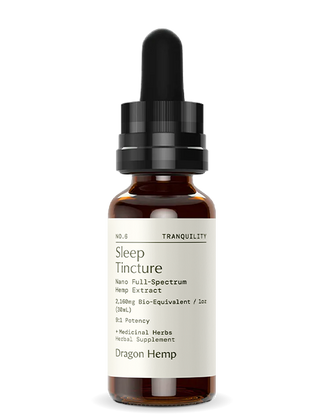
The upgrade — Sleep Tincture: Add your dose of Sleep Tincture to the warm tea. The nano-cannabinoid complex initiates the transition to restorative sleep within 15 minutes — with up to 9× greater bioavailability than standard oil-based extracts. Suan Zao Ren Tang, the classical TCM formula anchoring the Sleep Tincture, nourishes the Liver Blood, calms the Heart-Shen, and clears the excess Heat that drives nighttime waking at its root.
Chrysanthemum or chamomile and Suan Zao Ren Tang work in the same direction. Both cool the Liver. Both quiet the Shen. One is in the cup. One is in the tincture. Together they create a compounding calming effect that either base alone cannot deliver.
The ritual itself — the deliberate preparation, the warmth in the hands, the slowing of pace — activates the parasympathetic nervous system before the first sip. In TCM terms, this is the transition from Yang (outward, active energy) to Yin (inward, restorative stillness). The body needs a signal that the day is done. This is that signal.
Practitioner-formulated to restore the balance necessary for a full, deep sleep cycle.
This high-potency tincture draws from time-honored 'Suan Zao Ren Tang' formulas, blending traditional Chinese herbs—long-trusted to settle a restless mind and nourish the spirit—with nano-encapsulated CBD & CBN to target the racing thoughts and midnight wakefulness that disrupt your rest. By helping you stay asleep longer, it ensures your body reaches the deep cycles essential for systemic recovery and physical restoration.
Because a full night of sleep is about more than just rest—it’s about waking with the energy and focus to feel like yourself again.
|
Time |
Ritual |
Formula |
|
Mid-morning or afternoon |
Chrysanthemum or chamomile tea |
Cortisol reset, ECS support, Liver Heat clearance |
30–45 min before bed |
Chrysanthemum or chamomile tea |
Sleep descent, Suan Zao Ren Tang, Heart-Shen calming |
Both rituals use the same tea base. Both clear Liver Heat. Both support the nervous system through different phases of the same biological cycle. The daytime ritual reduces what the nighttime ritual has to resolve. The nighttime ritual completes what the daytime ritual began. Used together, they form a complete day-to-night calming tea protocol that addresses the root cause of stress and poor sleep from both ends of the day.
This is the practitioner's approach to calming tea: not a single cup before bed, but a deliberate, timed protocol that closes the loop.
Chrysanthemum and chamomile are genuinely therapeutic — their active compounds are clinically active and the ritual itself has measurable parasympathetic benefit. But steeping flowers in water extracts only the water-soluble compounds. The fat-soluble botanical actives in a formula like Suan Zao Ren Tang remain largely bound to the plant matter.
Nano-emulsified tinctures solve this. The active compounds in Suan Zao Ren Tang and the full-spectrum cannabinoid complex are broken down to nano-scale particles — small enough to bypass first-pass digestive metabolism and absorb directly into the bloodstream. What steeping leaves behind, nano-emulsification delivers.
Adding Sleep Tincture or Wellness Tincture to your calming tea does not replace the ritual. It upgrades it — combining the ceremonial and parasympathetic benefits of a warm cup with the clinical precision of a practitioner-formulated botanical extract.
A calming tea ritual is one of the most time-tested therapeutic tools in Chinese herbal medicine — but its efficacy depends entirely on the herbs you use, when you use them, and how your body absorbs them. Chrysanthemum (Ju Hua) is the classical TCM calming tea, cooling Liver Heat directly and precisely. Chamomile is its most accessible Western equivalent — sharing the same cooling properties and apigenin-driven GABA activity, and available in any grocery store.
By pairing either tea base with the clinical depth of Dragon Hemp's tinctures, you create a complete calming tea protocol that addresses the biological root of both stress and sleep disruption. Daytime: clear the cortisol, support the ECS, cool the Liver before the Heat accumulates. Nighttime: complete the descent, nourish the Blood, quiet the Shen. The daytime ritual reduces what the nighttime ritual has to resolve. The nighttime ritual completes what the daytime ritual began. One tea base. Two windows. A full-day protocol that finally closes the loop.
→ Next: What is Suan Zao Ren Tang?
→ Also: The Nightly Restoration Protocol | What is Chysanthemum Tea
Direct Answer: Chrysanthemum (Ju Hua) is the classical TCM calming tea for stress — cooling, Liver-clearing, and time-tested for centuries. Chamomile is the most accessible Western equivalent, sharing the same cooling properties and GABA-A receptor activity through its active compound apigenin.
Clinical Context: In TCM, chronic stress accumulates as excess Liver Heat — the same pattern that drives the wired-but-tired feeling during the day and nighttime waking at 3 AM. Both chrysanthemum and chamomile address this pattern directly. Pairing either with a nano-emulsified Wellness Tincture amplifies the effect through the endocannabinoid system, supporting cortisol regulation and nervous system equilibrium throughout the day.
Direct Answer: Chinese herbal tea is a therapeutic preparation of specific botanicals — roots, seeds, bark, and flowers — selected and combined according to TCM principles to address specific organ system imbalances rather than general flavor or caffeine content.
Clinical Context: Unlike black or green tea, which derives from a single plant, Chinese herbal tea is a formula — a synergistic combination designed to address the root pattern of a symptom. Suan Zao Ren Tang, for example, combines five herbs specifically to nourish Liver Blood, calm the Heart-Shen, and clear the excess Heat that drives insomnia and nighttime waking.
Direct Answer: Yes, when formulated to address the Liver's peak hour. The 1:00–3:00 AM window corresponds to the Liver Meridian on the Chinese Body Clock — when excess Liver Heat most commonly disturbs the Heart-Shen and triggers wakefulness.
Clinical Context: A nighttime calming tea ritual using chrysanthemum or chamomile and Sleep Tincture — anchored by Suan Zao Ren Tang — directly addresses this pattern. Both tea bases cool the Liver. Suan Zao Ren Tang nourishes the Liver Blood and calms the Shen. The nano-cannabinoid complex initiates and sustains the transition to restorative sleep before the Liver's peak hour begins.
Direct Answer: 30–45 minutes before bed. This window allows the active compounds to absorb and the parasympathetic nervous system to activate before sleep onset.
Clinical Context: In TCM, the transition from Yang to Yin — from active, outward energy to restorative, inward stillness — requires deliberate preparation. The evening calming tea ritual is that preparation: warm liquid to nourish Yin, cooling herbs to clear Heat, and the ceremony itself as a parasympathetic signal that the day is complete.
function: resetting cortisol accumulation and supporting nervous system equilibrium before stress compounds into evening tension and nighttime waking.
Clinical Context: Pairing chrysanthemum or chamomile tea with Wellness Tincture during the day addresses the Liver Heat and cortisol dysregulation that would otherwise require more work to resolve at bedtime. The daytime ritual reduces what the nighttime ritual has to resolve — creating a full-day protocol that addresses the root cycle rather than just its nighttime expression.
Direct Answer: Chrysanthemum (Ju Hua) is the classical TCM calming tea — formally classified as cooling, bitter, and active in the Liver and Lung channels. Chamomile is its most accessible Western equivalent, sharing the same cooling, Liver-clearing properties and clinically active apigenin compound, and widely available in grocery stores.
Clinical Context: Both herbs address the same TCM root pattern — excess Liver Heat disturbing the Heart-Shen — and both are appropriate bases for this calming tea protocol. Chrysanthemum is the more precise clinical choice. Chamomile is the more accessible practical choice. For those new to Chinese herbal medicine, chamomile is an excellent starting point that delivers genuine therapeutic benefit while being easy to source and prepare.
Direct Answer: Yes. Both chrysanthemum and chamomile are gentle, non-addictive, and appropriate for daily use. They work cumulatively over time rather than producing immediate sedation.
Clinical Context: In TCM, daily herbal rituals are the foundation of preventive medicine — small, consistent inputs that keep the body's systems in balance rather than waiting for disruption to treat. A daily calming tea ritual, particularly when paired with Dragon Hemp's tinctures, supports the long-haul nervous system equilibrium that determines sleep quality, stress resilience, and hormonal balance over time.
Dragon Hemp was established by Kevin Menard, LAc, a specialist in Sports Medicine Acupuncture and Traditional Chinese Medicine. Developed in his Sag Harbor clinic, our formulations bridge the gap between ancient herbal wisdom and modern cannabinoid research to address the root causes of pain, sleep, and wellness issues.
From our Rest & Restoration and Essential Wellbeing collections to our targeted Aches & Pains topicals, every product is formulated with organically grown botanicals and premium hemp extracts. We invite you to experience our sophisticated fusion of tradition and innovation at our flagship apothecary at 108 Main Street, Sag Harbor, or explore our full range of tinctures, gummies, and balms online.