




Bi Syndrome in TCM — Why Your Joints Hurt More in Cold and Damp Weather
|
|
Time to read 12 min
3rd Recovery Remedy Free • Code: R3COVER • Arthritis Awareness Month • SHOP NOW
|
|
Time to read 12 min
Bi syndrome is the TCM framework for all joint and channel obstruction — the pathogen (Wind, Cold, Damp, or Heat) determines the pattern and the treatment
Cold Bi and Damp Bi explain a clinical observation Western medicine has no clean framework for: why joint pain reliably worsens when the weather shifts — Cold deepens obstruction in winter, Damp settles in joints during humid seasons, and both signal channels that are already compromised.
Damp Bi — the heavy, swollen, slow-to-loosen pain that arrives with humidity — is the pattern most often misattributed to 'getting older' or 'a bad joint.' It has a name, a mechanism, and a herbal answer.
The Warming vs. Cooling distinction is clinically non-negotiable — applying the wrong thermal formula to the wrong Bi pattern can worsen symptoms acutely
Corydalis is the only herb in both formulas because its analgesia is thermally neutral — it addresses pain regardless of the pattern
Table of Contents
The Short Answer: Bi Syndrome (痹症) is traditional Chinese medicine's primary diagnostic framework for joint and musculoskeletal pain — a pattern in which external pathogenic factors (Wind, Cold, Damp, or Heat) invade the body's channels and obstruct the free flow of Qi and Blood. Pain, in TCM, is always obstruction. The type of pathogenic factor determines the character of the pain: Cold Bi produces severe, fixed pain that improves with heat. Damp Bi produces heavy, aching pain with swelling. Wind Bi produces migrating pain that shifts location. Heat Bi produces hot, swollen, inflammatory joint pain. Modern research on barometric pressure, humidity, inflammation, and nerve sensitization now confirms what TCM clinical observation has mapped for 2,000 years — your joints really do feel the weather, in every season.
If you notice your joints hurt more when the weather changes, you are not imagining it. If cold weather, rising humidity, or shifting barometric pressure reliably produces more pain than warm dry weather, this is not coincidence. Traditional Chinese medicine has had a clinical framework for this observation for over 2,000 years. Western research is now producing the mechanisms that explain it.
The framework is Bi Syndrome — one of the most clinically specific and practically useful concepts in TCM for anyone managing chronic joint or musculoskeletal pain.
Bi (痹) translates as "obstruction" or "blockage." Bi Syndrome describes a condition in which external pathogenic factors — Wind, Cold, Damp, or Heat — penetrate the body's exterior defenses and lodge in the channels (meridians), muscles, tendons, and joints. Once established, these pathogens obstruct the free circulation of Qi and Blood through the affected area, producing the characteristic symptoms of pain, stiffness, swelling, and restricted movement.
The classical TCM text Huangdi Neijing (Yellow Emperor's Classic of Internal Medicine, approximately 200 BCE) describes Bi Syndrome in precise clinical terms — identifying the four pathogenic types, their distinct symptom profiles, and their differential treatments. This is among the oldest systematic descriptions of what Western medicine now calls arthritis, rheumatism, and inflammatory joint disease.
The defining characteristic: pain that migrates from joint to joint, shifting location over hours or days. Wind is the most mobile of the pathogenic factors — it moves and changes by nature, and the pain it produces reflects this. Other features: symptoms that vary with weather, pain that is generally less severe than Cold Bi but more unpredictable, joints that may not show visible swelling.
TCM treatment: expel Wind, move Qi and Blood to restore circulation. Herbs: Pubescent Angelica Root (Du Huo) specifically targets the lower body channels. Chinese Angelica Root (Dang Gui) nourishes Blood and moves it simultaneously.
The defining characteristic: severe, fixed pain at a specific location that improves dramatically with heat application and worsens with cold exposure. Cold constricts channels and vessels, producing intense obstruction. This is the most acutely painful of the four Bi patterns — Cold Bi pain can be severe enough to be incapacitating.
Other features: pain that is fixed (does not migrate), stiffness that is worse in the morning or after rest, dramatic improvement with warm compresses or heat therapy, pain that intensifies in cold environments or when exposed to cold water.
TCM treatment: warm the channels, dispel Cold, move Qi and Blood. The Warming Balm — with Aconite, Capsicum, Mugwort, Cajeput, and Cloves — is formulated specifically for this pattern. These intensely warming herbs penetrate the channels and actively dispel the Cold pathogen from within the tissue.
The defining characteristic: heavy, aching, fixed joint pain with visible swelling and a sensation of heaviness in the affected area. Damp is sticky and accumulating by nature — it settles in joints and is difficult to clear without active drying intervention.
Other features: swollen, sometimes puffy joints; pain that is fixed and persistent rather than migrating; symptoms that worsen in humid conditions or damp environments; a characteristic heaviness or numbness in the affected area; digestive sluggishness that often accompanies Damp patterns.
TCM treatment: resolve Damp, strengthen the Spleen's drying function, move Qi and Blood through the accumulation. Warming herbs that dry Damp (Aconite, Mugwort, Cajeput) alongside Blood-moving herbs (Frankincense, Myrrh, Corydalis) address both the pathogenic factor and the stagnation it creates.
The defining characteristic: red, swollen, hot joints with acute inflammatory pain that worsens with heat and improves with cold application. Heat Bi is the classic presentation of what Western medicine calls acute inflammatory arthritis — gout, rheumatoid arthritis flares, and acute infectious joint inflammation all map to this pattern.
Other features: joints that are visibly red and warm to touch, pain that is severe and acute, general systemic signs of Heat (thirst, fever, irritability), dramatic improvement with ice or cold application.
TCM treatment: clear Heat, cool Blood, move stagnation. The Cooling Balm — with Camphor, Gardenia Fruit, Red Peony Root — addresses this pattern directly. Camphor provides cooling penetration. Gardenia clears Heat and reduces inflammation. Red Peony cools Blood without adding warming action.
Patients with arthritis and chronic joint pain have reported weather sensitivity for as long as medicine has been practiced. Western medicine was slow to validate this observation — but research on barometric pressure and joint pain now confirms the mechanism. Falling barometric pressure — which precedes cold and damp weather fronts — produces relative expansion in joint capsule tissue. In joints already sensitized by inflammation, this expansion activates pain receptors that would not fire under stable pressure conditions.
Cold temperature independently affects joint pain through vasoconstriction — reduced circulation to joint tissue, increased viscosity of synovial fluid, and reduced elasticity of connective tissue all contribute to the stiffness and pain amplification that Cold Bi describes at the channel level.
Damp conditions — specifically high humidity — correlate with increased inflammatory marker levels in some studies, though the mechanisms are still being characterized. The TCM observation that Damp accumulates in joints and is difficult to resolve mirrors the clinical reality that joint inflammation in humid conditions is characteristically stubborn and slow to respond.
Humidity affects joint pain through several confirmed mechanisms. Rising ambient moisture increases the water content of synovial tissue and collagen-rich joint capsules, which can amplify pain signaling in already-inflamed joints. High humidity also correlates with elevated inflammatory marker levels in clinical studies — a finding that mirrors the TCM observation that Damp settles in joints and is characteristically stubborn to clear. For patients whose joints get heavy and ache before a summer storm or during a rainy week, this is the mechanism.
The critical clinical decision in treating Bi Syndrome is pattern identification — which of the four types is present, and which thermal nature of formula is therefore appropriate.
For Cold Bi and Damp Bi: the Warming Balm applied topically at the affected joint, combined with the Recovery Tincture systemically. The warming herbs dispel Cold and Damp from the channels. The Blood-moving herbs resolve the stagnation they have caused. The nano-CBD reduces the systemic inflammatory burden. The CBN supports the overnight repair cycle.
For Heat Bi and acute inflammatory presentations: the Cooling Balm applied topically, combined with the Wellness Tincture for systemic CBD support. The Wellness Tincture's 60mg full-spectrum CBD modulates the CB2-mediated inflammatory cascade without adding thermal burden to an already-heated pattern. The Cooling Balm clears the local Heat pathogen and moves the stagnation.
Formulated to warm the body and move stagnation in joints and muscles that have grown stiff over time.
This fast-acting topical moves with you, pairing a robust concentration of full-spectrum hemp extract with heating Chinese herbs to provide a deep, circulating warmth to areas of lingering discomfort.
Drawing from time-honored ‘dit da jow’ martial arts formulas, this high-potency blend encourages blood flow and thaws the "stuck" energy that makes movement feel like a chore to help you reclaim your daily mobility and stay active with ease.
Because chronic stiffness shouldn’t be a barrier—and finding your flow should feel effortless.
Formulated to calm the body and clear excess heat following activity or physical stress.
This fast-acting topical moves with you, pairing a robust concentration of full-spectrum hemp extract with cooling Chinese herbs to provide a steady, refreshing chill to areas of sudden sensitivity.
Drawing from time-honored ‘dit da jow’ martial arts formulas, this high-potency blend encourages circulation while systematically diffusing the "trapped" heat from overexertion to help you maintain balance and return to movement.
Because recovery shouldn’t be a waiting game—and keeping your cool shouldn’t keep you frozen in place.
Direct Answer: Bi Syndrome (痹症) is TCM's primary framework for joint and musculoskeletal pain — a pattern in which external pathogenic factors (Wind, Cold, Damp, or Heat) obstruct the channels and prevent free flow of Qi and Blood, producing pain, stiffness, swelling, and restricted movement.
Clinical Context: Bi Syndrome is not a single diagnosis but a family of patterns, each with distinct characteristics and requiring different treatments. Correct identification of the pattern type — Cold, Wind, Damp, or Heat — determines the correct thermal nature of the herbal formula and the appropriate topical and internal intervention.
Direct Answer: Cold temperature produces vasoconstriction in joint tissue, reduces synovial fluid viscosity, and decreases connective tissue elasticity — all of which amplify pain in joints already sensitized by inflammation. Falling barometric pressure before cold weather fronts also causes relative expansion in joint capsules, activating pain receptors.
Clinical Context: In TCM, this is Cold Bi — the Cold pathogen constricting the channels and intensifying obstruction. The treatment principle is direct: warm the channels, dispel Cold, and move the stagnation that Cold constriction has created. The Warming Balm's formula — Aconite, Capsicum, Cajeput, Cloves — is designed for exactly this pattern.
Direct Answer: Rising humidity affects joint pain through several mechanisms. High humidity typically accompanies falling barometric pressure ahead of summer storms — producing the same joint capsule expansion documented in winter weather research. Falling barometric pressure ahead of summer storms causes relative expansion in joint capsules. And elevated humidity correlates with increased inflammatory marker activity in clinical studies — meaning the joint is genuinely more inflamed during humid weather, not just feeling that way.
Clinical Context: In TCM, this is Damp Bi — the Damp pathogen settling in joints and obstructing the flow of Qi and Blood. It produces the heavy, fixed, slow-loosening pain that arrives every Xiao Man (the late-spring solar term marking the rise of Damp) and lingers through summer. The treatment principle is to clear Damp and move the obstruction it has created. The Warming Balm's formula — Aconite, Capsicum, Cajeput, and Cloves — actively dries Damp and dispels the obstruction from the channel level.
Direct Answer: TCM classifies arthritis presentations within the Bi Syndrome framework: rheumatoid arthritis flares as Heat Bi or Wind Bi; osteoarthritis as Cold Bi or Damp Bi; gout as Heat Bi. Treatment varies by pattern type rather than Western diagnosis — pattern identification determines the formula.
Clinical Context: The TCM approach does not replace Western diagnosis but provides a complementary pattern identification that determines the most appropriate herbal intervention. A person with osteoarthritis (a Western diagnosis) may present with Cold Bi, Damp Bi, or a combination — and the treatment differs significantly based on which pattern is primary.
Direct Answer: Treatment depends on the pattern type. Cold Bi: warming herbs to dispel Cold and move Blood — Warming Balm topically, Recovery Tincture systemically. Heat Bi: cooling herbs to clear Heat and move stagnation — Cooling Balm topically, Wellness Tincture systemically. Damp Bi: drying and moving herbs to resolve accumulation. Wind Bi: Wind-expelling and Blood-moving herbs.
Clinical Context: The most important clinical principle is matching the thermal nature of the formula to the thermal nature of the pattern. A warming formula applied to a Heat Bi presentation will intensify the Heat. A cooling formula applied to a Cold Bi presentation will drive the Cold deeper. Pattern identification is the prerequisite to effective treatment.
Direct Answer: Bi Syndrome is a broader framework that encompasses many conditions Western medicine classifies as arthritis, rheumatism, and inflammatory joint disease — but the classification system is pattern-based rather than disease-based. Multiple Western diagnoses can present as the same Bi pattern; a single Western diagnosis can present as multiple Bi patterns in different individuals.
Clinical Context: This is both the strength and the clinical utility of the TCM framework — it classifies based on the individual's actual presentation rather than fitting the presentation into a fixed disease category. Two people with rheumatoid arthritis may require completely different TCM treatments if one presents as Heat Bi and the other as Cold Bi.
Direct Answer: Choose based on your pattern: warming herbs and topicals for Cold or Damp Bi (pain that worsens in cold or damp weather and improves with heat), and cooling herbs and topicals for Heat Bi (joints that feel hot to the touch, appear red or swollen, or worsen in warm conditions). One exception always overrides pattern: within the first 48 hours of any acute injury, use a cooling topical regardless of your underlying pattern.
Clinical Context: In TCM, Bi syndrome describes obstruction of Qi and Blood in the channels — but the nature of that obstruction differs by pattern. Cold Bi presents with sharp, contracting pain that responds dramatically to warmth; Damp Bi tends toward heavy, fixed aching that worsens after rain or humidity. Both are treated with warming circulation — Dragon Hemp's Warming Balm combines Capsicum, Mugwort, Cloves, and Aconite to dispel Cold and Damp, move stagnant Qi, and restore channel flow. Heat Bi is the inverse: inflammation, redness, and swelling indicate excess Heat in the joints, which warming herbs would aggravate. Dragon Hemp's Cooling Balm — with Camphor, Gardenia Fruit, and Red Peony Root — clears Heat and reduces swelling without adding thermal stimulation. The 48-hour rule matters because fresh tissue injury always involves acute inflammation, and applying heat during this window can increase swelling and prolong recovery, even in a patient whose chronic pattern is Cold Bi. After the acute phase resolves, return to pattern-appropriate treatment.
Dragon Hemp was established by Kevin Menard, LAc, a specialist in Sports Medicine Acupuncture and Traditional Chinese Medicine. Developed in his Sag Harbor clinic, our formulations bridge the gap between ancient herbal wisdom and modern cannabinoid research to address the root causes of pain, sleep, and wellness issues.
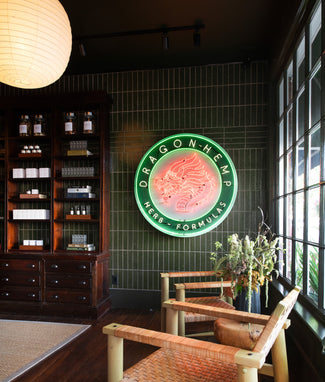
From our Rest & Restoration and Essential Wellbeing collections to our targeted Aches & Pains topicals, every product is formulated with organically grown botanicals and premium hemp extracts. We invite you to experience our sophisticated fusion of tradition and innovation at our flagship apothecary at 108 Main Street, Sag Harbor, or explore our full range of tinctures, gummies, and balms online.


